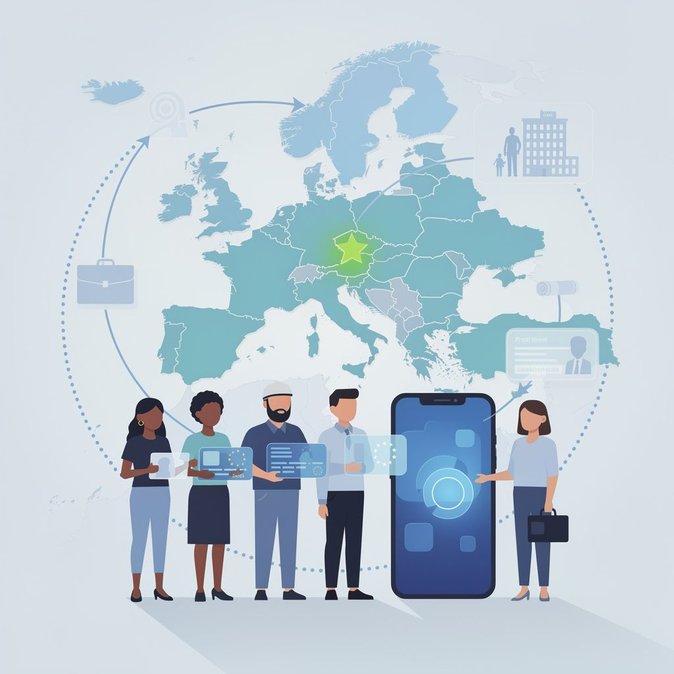
Ireland, in its role as holder of the EU Council presidency, opened a two-day conference in Dublin’s Royal Hospital Kilmainham on 19 November under the banner “Future-proofing Europe’s labour migration policy: New approaches to managing labour immigration amidst a changing labour and skills landscape.” The event, organised by the European Migration Network (EMN) Ireland, brings together officials from the European Commission, EU agencies, national migration authorities and corporate-mobility leaders. Opening remarks from Tánaiste Micheál Martin highlighted Ireland’s own reliance on skilled migration—non-EEA nationals accounted for 61 % of net job creation between 2019 and 2024—and called for “agile, data-driven” admission systems that can be scaled quickly in response to labour-market shocks. Panel sessions are examining digitalisation of permit processes, recognition of third-country qualifications and pathways from temporary work status to long-term residence. One headline proposal is a pan-EU “mobility wallet” that would store biometric data, labour-market-test results and social-security contributions, allowing workers to move between member states without resubmitting full dossiers. Business delegates from the tech and life-sciences sectors argued that such a tool could cut redeployment lead-times by 30 % and help smaller member states like Ireland remain competitive for top talent. Critics, including the Migrant Rights Centre Ireland, warned that portability must not come at the expense of worker protections. They urged the EU to pair any new mobility privileges with stricter enforcement of minimum-wage and housing-standards directives to prevent a “race to the bottom.” A closing communiqué is expected on 20 November and will feed into Council discussions on the proposed revision of the Single Permit Directive. For global-mobility departments, the conference signals growing political momentum behind streamlining intra-EU assignments—changes that could materially alter how Irish companies deploy staff across the bloc over the next five years.