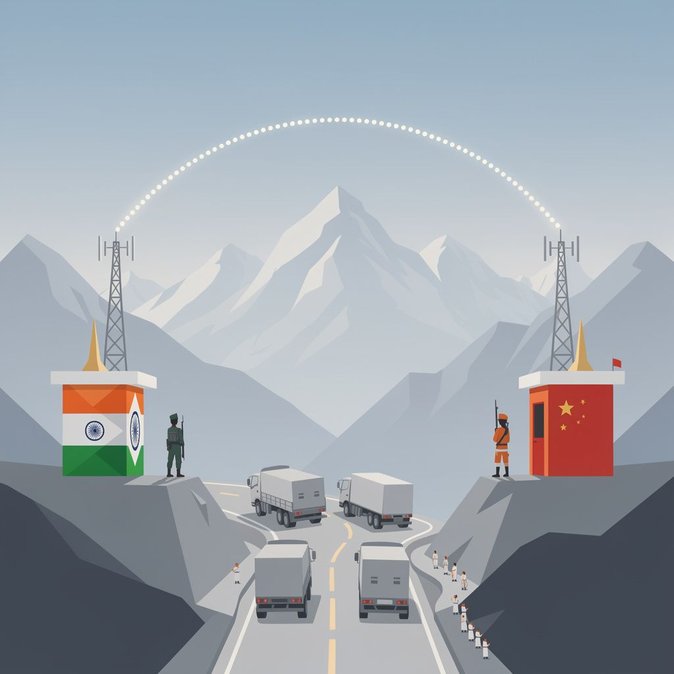
The 20 November round of Special Representatives’ talks on the India–China boundary question concluded with an eight-point agreement aimed at lowering tensions along the Line of Actual Control (LAC). Highlights include establishing two new military hotlines, adding commander-level meeting points and fast-tracking an expert mechanism on trans-border rivers. National Security Adviser Ajit Doval and Chinese Foreign Minister Wang Yi said the measures would “consolidate the broader normalisation of bilateral relations.” For cross-border mobility the consensus matters on two fronts. First, improved crisis-communication channels reduce the likelihood of sudden border closures that disrupt trade corridors through Nathu La and the Shipki La pass, key for project cargo into the North-East. Second, the pledge to advance boundary delimitation talks may ease restrictions on Kailash-Mansarovar pilgrimage routes that have been suspended since 2020. Logistics firms serving the Sino-Indian circuit note that even incremental de-escalation can shave insurance premiums and permit costs. However, analysts caution that the agreement is short on timelines and that on-ground patrol friction remains a variable risk. Businesses with Himalayan supply chains should therefore continue contingency planning but may factor in a slightly lower probability of abrupt disruption over the winter months.