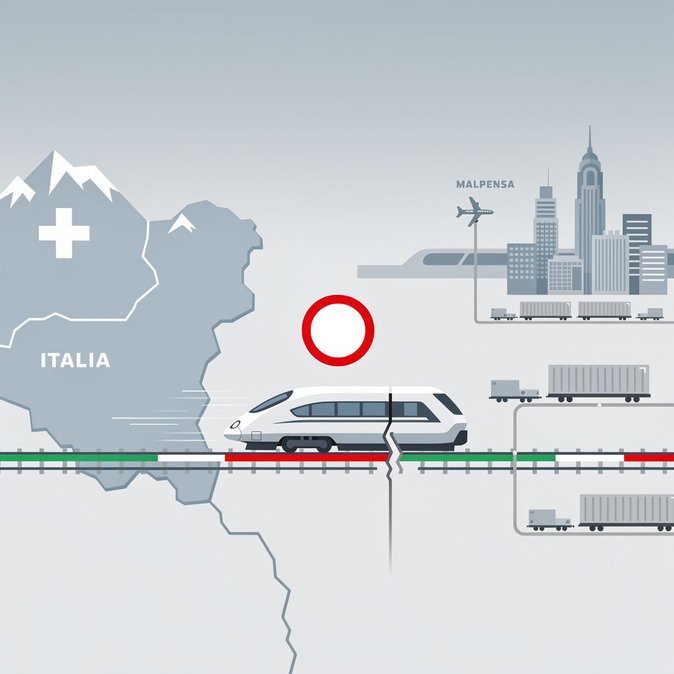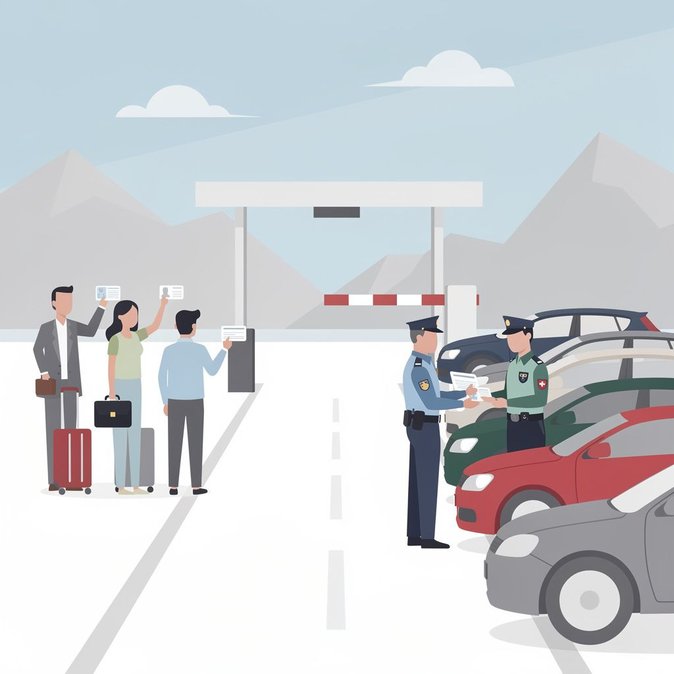
Swiss authorities have published the results of a large-scale joint operation carried out this autumn along the Ticino–Lombardy frontier. Between September and November the Cantonal Police of Ticino and the Federal Office for Customs and Border Security (BAZG/UDSC) mounted 43 control points around Mendrisio, checking 461 vehicles and 699 people. The figures—released on 20 November—show 26 breaches of Switzerland’s road-traffic code, 17 customs offences, three persons wanted on outstanding warrants and, most worryingly, one counterfeit identity document. Officials said the exercise was designed to target petty cross-border crime as well as more serious offences such as drug smuggling and human trafficking. In one instance officers found 1.5 grams of cocaine hidden in a specially adapted compartment; in another they intercepted a vehicle with a false registration intended to disguise stolen goods. The discovery of a fake ID highlights the ongoing challenge of document fraud faced by Swiss migration authorities and reinforces Bern’s recent push for stricter in-person checks of foreign residents’ passports. For global-mobility managers, the operation is a reminder that the Swiss-Italian border—although inside Schengen—remains subject to vigorous spot checks. Companies sending staff to Lugano or the booming life-sciences clusters of Ticino should ensure that employees carry originals of their residence permits and have customs documentation in order when transporting work equipment across the border. Firms making regular runs with company vans may also wish to consider AEO (Authorised Economic Operator) status to reduce inspection times. The joint sweep is part of a broader federal strategy to deploy mixed police–customs task forces at “hot spots” from Basel to Chiasso. Authorities believe the approach not only deters criminals but also fosters knowledge-sharing between agencies. Further operations are expected in the pre-Christmas period when cross-border shopping and seasonal labour peaks put extra pressure on border infrastructure. Ticino’s cantonal government praised the cooperation, noting that the region receives more than 70,000 Italian cross-border workers daily. Maintaining secure but fluid borders is crucial for the local economy, which relies on a seamless flow of both goods and commuters.