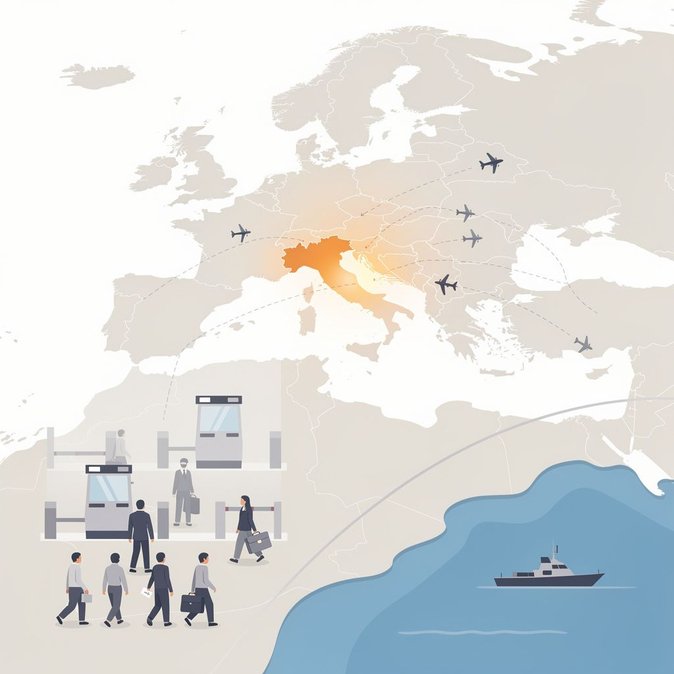
Cyprus’ long-running quest to enter Europe’s passport-free Schengen area gained fresh momentum this week after Migration Minister Nicholas Ioannides revealed that 15 member states have formally signalled support, with none opposing. The update came at the same 20 November press briefing that focused on the island’s wider migration modernisation agenda. Ioannides stressed that Cyprus completed all Schengen technical evaluations in 2024 and that the current push is purely political. The government’s working target—echoed publicly by Greek Prime Minister Kyriakos Mitsotakis during his visit to Nicosia on 18 November—is to secure unanimous Council approval in time for accession on 1 July 2027, the day Greece assumes the rotating EU presidency. Cyprus’ inclusion would abolish systematic passport checks for travel between the Republic and the rest of Schengen, simplifying intra-EU business trips and potentially boosting inbound tourism by up to 10 percent, according to the Cyprus Hotel Association. It would also require the island to apply the Schengen Borders Code on its external frontiers and to connect fully to the Entry/Exit System and ETIAS ahead of their EU-wide launch. Diplomats say remaining questions from sceptical capitals relate to migration flows across the UN-patrolled Green Line and the island’s capacity to police maritime borders. The Deputy Ministry of Migration is preparing an updated action plan covering border-surveillance technology, data-protection safeguards and joint return operations to assuage concerns. For multinational employers the move would eliminate an administrative anomaly that currently forces travellers to carry passports and undergo checks when flying from other EU hubs to Larnaca or Paphos, even on short-haul hops. Global mobility teams should, however, monitor forthcoming guidance on how Green Line crossings will be handled under Schengen rules.
Source: NewsCyprus.eu