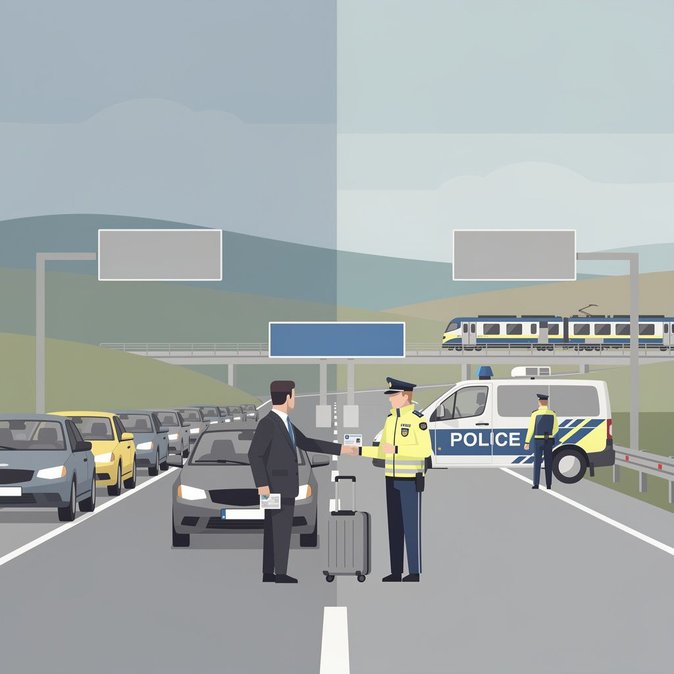
The Federal Police Directorate Munich released fresh statistics on 21 November 2026 covering the period from 16 September 2024—when Germany re-introduced temporary controls on its land borders with Austria and the Czech Republic—through 31 October 2026. Officers registered 23,738 unauthorised entries, made 15,394 rejections or “push-backs” at the frontier and executed 5,449 outstanding arrest warrants. Particularly striking is the arrest of 1,146 suspected smugglers during the two-year span. While the re-imposed checks remain controversial in Brussels, Berlin argues they are essential to curb secondary movements and organised trafficking. Most interceptions occurred along the A8 and A17 corridors used by minibuses transporting Syrians, Afghans and Turks who had already claimed protection in another EU state. According to the police, nearly 40 percent of those stopped immediately applied for asylum in Germany, underscoring the complexity of enforcement. For companies running commuter or shuttle services across the Bavarian frontier, the figures serve as a reminder that delays remain likely, especially during peak inbound hours when full ID verification is applied. Employers should advise cross-border staff to carry passports and residence cards even on routine trips and build extra buffer time into supply-chain schedules. Logistics providers note that spot checks have added an average of 25 minutes to Munich-Salzburg lorry transits. From a policy standpoint the data will feed into the federal government’s decision—due by mid-December—on whether to prolong the controls for another six months. Interior-ministerial sources say arrests of smugglers will weigh heavily in that assessment, while business associations lobby for a risk-based, intelligence-led model rather than blanket checks.
Source: Polizei.news