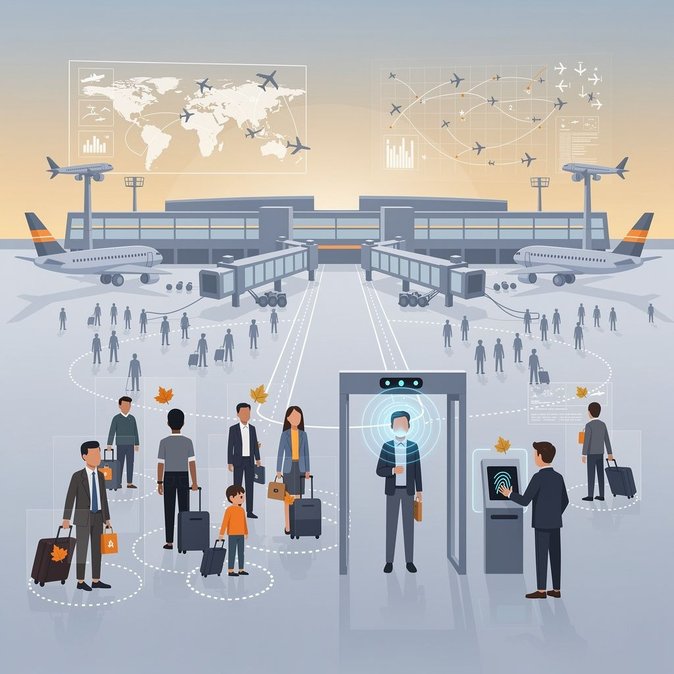
Chicago’s aviation hubs will head straight from crisis mode into holiday mode this weekend. A rare nationwide ground-stop on 14 November brought U.S. commercial aviation to a stand-still for nearly three hours while the Federal Aviation Administration patched a software upgrade that had overloaded decades-old hardware. Although operations normalized within 48 hours, carriers and airport operators have spent the past week rebuilding aircraft rotations and crew schedules in time for one of the busiest travel periods of the year. United Airlines—which bases its largest hub at O’Hare—expects almost 640,000 departing passengers between 19 November and 1 December, up 5 percent on last year. The carrier has fast-tracked new passenger-flow technology, including biometric bag-drop units and automated boarding gates, as well as an off-airport luggage-check site in River North to relieve curb congestion. Midway is adding overflow security lanes and a temporary rideshare lot to keep traffic moving. Data provider INRIX warns that road congestion will peak Tuesday afternoon on arterial expressways leading to the airports, while AAA projects 81.5 million Americans will travel 50 miles or more during the six-day Thanksgiving window. Although that is fractionally below last year’s record, United’s Chicago bookings show business-and-leisure demand remains resilient despite a 22 percent jump in average domestic airfares since September. For corporate mobility programs, the confluence of residual schedule volatility, higher fares and heavier passenger volumes means extra slack time—and clear communications with traveling employees—will be critical. Travel managers are advising flyers to arrive at least two hours before departure, pre-book parking or ride-hail slots, and monitor carrier apps for gate or equipment swaps triggered by the post-ground-stop recovery. Companies with same-day assignment moves are shifting some trips to Monday or Thanksgiving Day itself, when traffic historically ebbs. Long-term, the episode underscores mounting pressure on the FAA’s aging technology stack. Congress is considering a $50 billion modernization request, and business-travel coalitions argue that failure to invest will expose enterprises to repeated mass-disruption events. Until funding is secured, contingency planning around U.S. hub airports will remain an unavoidable part of mobility strategy.
Source: Axios