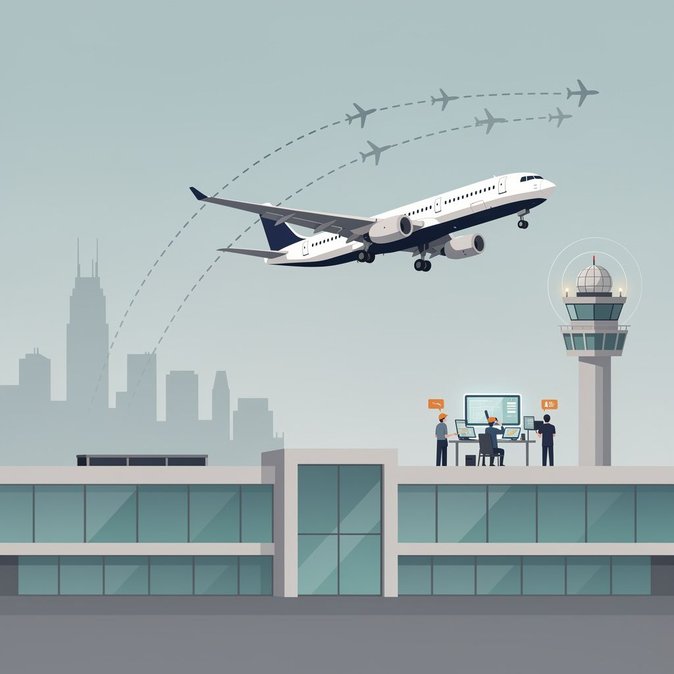
Chicago’s two major airports are bracing for one of their busiest Thanksgiving periods in years barely a week after a four-hour nationwide ground-stop exposed weaknesses in the Federal Aviation Administration’s aging IT backbone. Transportation analytics firm INRIX projects the heaviest road traffic on Tuesday-Wednesday before the holiday and the following Sunday–Monday, while United Airlines says its bookings into and out of Chicago are already running 5 percent above last year’s volumes. Airlines and airport operators are racing to rebuild traveler confidence after the November 13 telecommunications failure forced the FAA to order the first system-wide halt to departures since 2001. O’Hare International has added extra customer-service staff, positioned mobile generators near critical communications huts and created “quick response” technical teams that can be dispatched within minutes if flight-information displays go dark. Midway Airport, which handles a heavy share of leisure and point-to-point business travel, has set up a reserve security lane that can be flipped into operation in under 15 minutes should passenger queues exceed 30 minutes. For corporate travel managers, the lesson is clear: build more slack into itineraries that rely on hub-and-spoke connections through ORD and MDW. United and American Airlines have both issued limited change-fee waivers for itineraries touching Chicago between 22 and 28 November, but only if re-booked into the same cabin. The disruption has also revived calls in Congress for a multi-year FAA technology modernization package—funding that airline trade group A4A says is critical to keep reliable connectivity between radar stations, communication relays and the National Airspace System’s new AI-assisted “SMART” flow-management tool. Looking beyond Thanksgiving, aviation analysts warn that the December holidays could bring a second stress-test if promised hardware replacements at two Texas and Arkansas radar sites are not completed on time. Travelers whose work depends on on-time arrivals—consultants, auditors and field-service engineers—may want to pad schedules or consider rail options on the Midwest’s busy Chicago-to-Detroit and Chicago-to-Milwaukee corridors. In the meantime, the Chicago Department of Aviation is urging passengers to arrive at least two hours before domestic flights and three hours before international departures and to sign up for text alerts that will provide real-time gate changes and security-line wait times.
Source: Axios Chicago