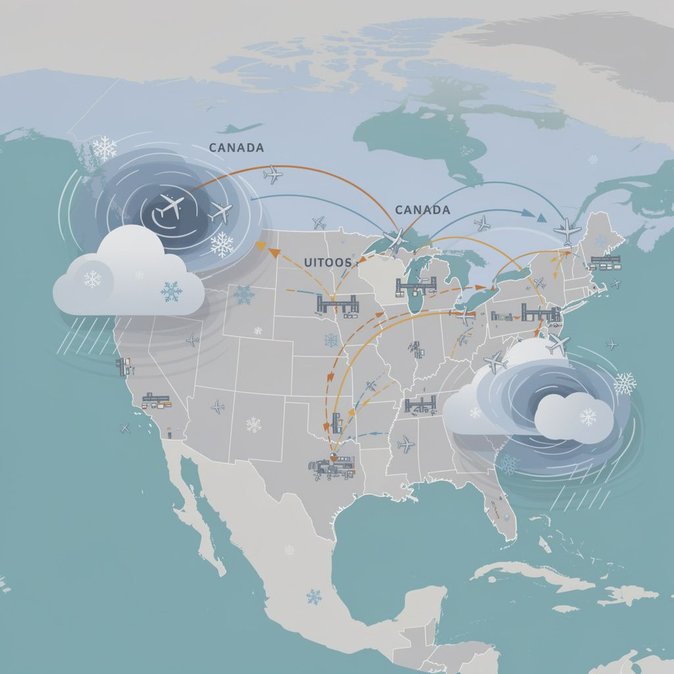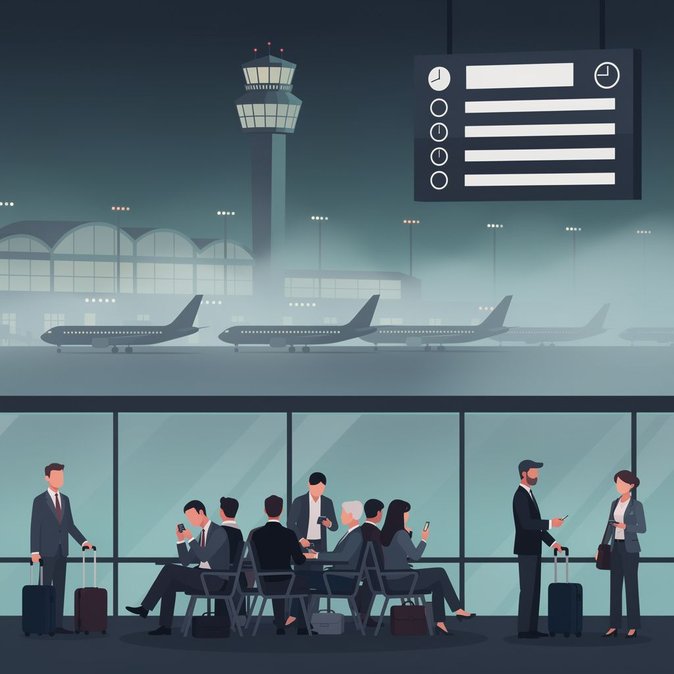
A short-lived but disruptive ground-stop was issued for Toronto Pearson International Airport (YYZ) in the early hours of Sunday, 22 November 2026, after dense ground fog reduced runway visibility below aviation minima. According to the FAA advisory captured by independent tracker GroundStop.app, departures to Pearson were held at seven U.S. Air Route Traffic Control Centres beginning at 00:10 UTC and the stop was not lifted until 00:33 UTC. Although the pause lasted only 23 minutes, more than 70 flights fell within its window, affecting all of Canada’s major carriers. Impact modelling from the advisory shows Air Canada had 24 flights scheduled, with five delayed; WestJet saw one cancellation and one delay, while Porter and Air Canada Rouge each recorded multiple late departures. Average departure delays reached 40 minutes and the single cancelled flight – WestJet WS *** – was a transcontinental service from Calgary that was scrubbed after exceeding crew-duty limits. No diversions were reported for inbound traffic, but eight aircraft were held at origin for more than an hour, the longest being an Air Canada Rouge flight from Los Cabos delayed 2 hours 41 minutes. For business travellers, the incident is a reminder that even brief weather-related holds can ripple through tightly-timed itineraries on Canada’s busiest hub, particularly at the start of a heavy travel week. Travellers connecting to Asia-Pacific banks out of Toronto in the mid-morning were forced to hustle through shortened connection windows, and several reported missed meetings in Chicago and New York after onward delays stacked up. Pearson has invested heavily in CAT III ILS upgrades and high-speed exits in recent years, but early-morning ground fog remains its main operational vulnerability during late-autumn temperature inversions. Aviation analysts note that while the stop was minor compared with January’s ice-storm shutdown, it underscores why corporate mobility managers should build buffer time into itineraries that rely on the 06:00-09:00 departure complex. Real-time tools such as the free GroundStop alert feed and carrier flight-notification services can provide precious minutes to re-route travellers before queues form at service desks. In practical terms, travellers flying in the next few days should: 1) Monitor forecasts for overnight fog, 2) Sign up for airline SMS alerts, and 3) Consider booking meetings after 11 a.m. when possible to absorb morning volatility. Carriers have not announced waivers, but same-day rebooking was generally honoured for affected customers.
Source: GroundStop.app