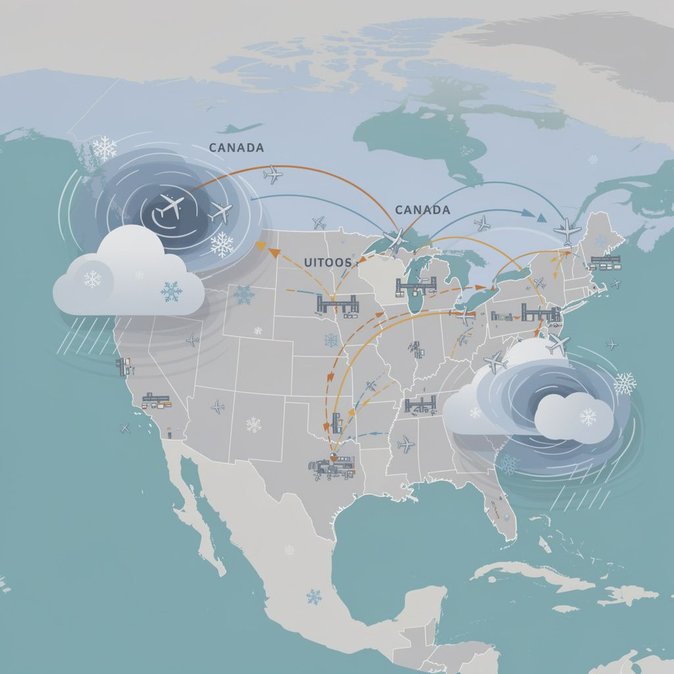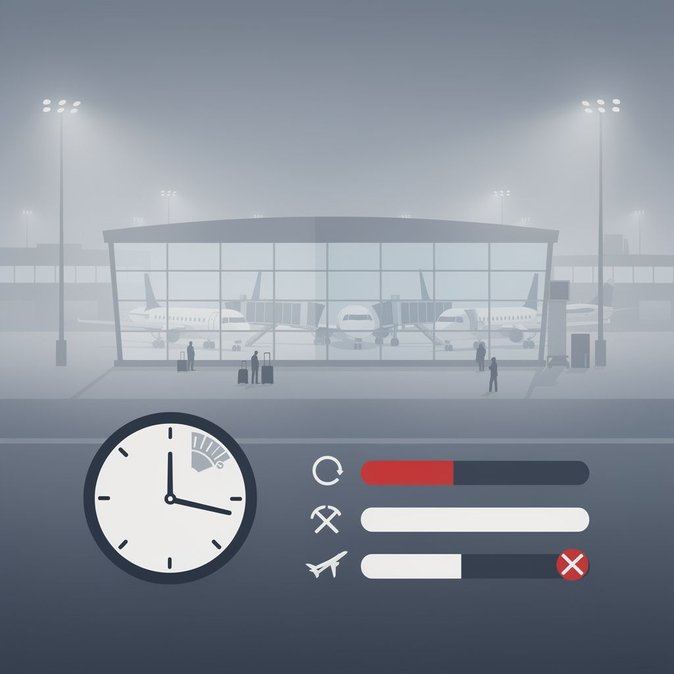
Business travellers passing through Toronto Pearson International Airport (YYZ) faced an unexpected snag just after midnight on Sunday when air-traffic control imposed a 23-minute ground stop because of dense fog. The restriction, which began at 00:10 UTC (07:10 EST) and ended at 00:33 UTC, halted all departures from seven U.S. air-traffic-control centres feeding into Toronto. In total, 73 flights were affected, with 18 delayed and one cancelled. Airlines hit hardest included Air Canada (five delays), Porter Airlines (five delays) and WestJet, which recorded the lone cancellation. Average delay times reached 40 minutes, with some aircraft held at origin airports for more than two hours. Although the stop was lifted quickly, ripple effects were felt across the morning bank of trans-border services, forcing operators to reposition crews and equipment. For corporate travel managers, the incident underscores the importance of building buffer time into itineraries during late-autumn operations, when visibility-related delays at Canada’s largest hub are common. The episode also tested Pearson’s revamped irregular-operations (IROPS) plan, rolled out after last winter’s weather debacle. Preliminary feedback from airport stakeholders suggests the real-time communication tools performed better, but passenger re-accommodation—especially for point-to-point carriers—remains a pain point. The Greater Toronto Airports Authority (GTAA) says it is analysing the event with NAV Canada and the FAA to fine-tune decision-making protocols. With U.S. Thanksgiving week looming, airlines are already authorising flexible rebooking options for travellers who can adjust departure dates to avoid potential knock-on delays. While a 23-minute halt may seem minor, the high utilisation of Pearson’s runway system means even short stoppages can cascade through the network. Travellers with tight connections to Europe or the U.S. Northeast on Sunday morning reported missed meetings and last-minute itinerary changes—an unwelcome reminder that weather-induced disruptions can strike even outside the peak winter storm season.
Source: GroundStop.app