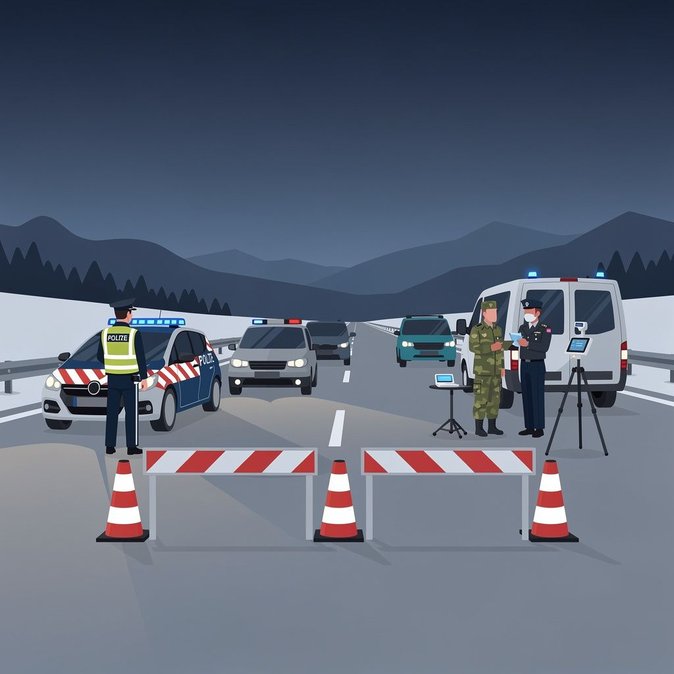
Swiss authorities tested their crisis-response playbook over the weekend with an intensive two-night control operation in the canton of Solothurn. From the evening of 20 November through the early hours of 22 November, 33 officers of the Cantonal Police, 45 members of the Swiss Armed Forces, document specialists from the Federal Office for Customs and Border Security (BAZG) and vehicle-inspection experts fanned out to road checkpoints around Olten, Oensingen and Grenchen. Their remit: practise inter-service coordination while fishing for irregular border crossers, wanted suspects and transport offences. According to the after-action statement reported by 20 Minuten and aggregated by Urgjent.com, officers verified the identities of 684 travellers and examined 455 cars, vans and trucks. Seventeen traffic violations were flagged, eight on-the-spot fines issued and one vehicle impounded. Alcohol- and drug-screening teams questioned four drivers on suspicion of impaired driving. Most significantly, two individuals were arrested; police have not disclosed their nationalities or the offences involved, citing the ongoing investigation. Commanders described the drill as a stress test for the new organisational landscape created when the former customs administration merged with border police functions under the BAZG in 2023. With the EU’s Entry/Exit System (EES) now fully operational, cantonal forces are being asked to shoulder a heavier share of inland identity checks while federal units concentrate on data capture at the external Schengen border. Weekend exercises like Solothurn’s allow troops and officers to practise shared radio protocols, document forensics and vehicle-search techniques before the busy December travel period. For businesses that run shuttle fleets across the Jura or move goods overnight from German and French depots into Swiss distribution hubs, the message is clear: expect more pop-up controls on secondary roads and ensure drivers carry correct CMR consignment notes and personal IDs. Companies employing cross-border commuters should remind staff that even intra-Schengen trips can be interrupted for spot checks and that failure to carry a recognised travel document can lead to delays or penalties. Looking ahead, the canton says it will repeat the exercise in early 2027 with an expanded customs-canine unit. Logistics managers are therefore advised to build a one-hour buffer into just-in-time routings that transit Solothurn on weekend nights.
Source: Urgjent.com (via 20 Minuten)