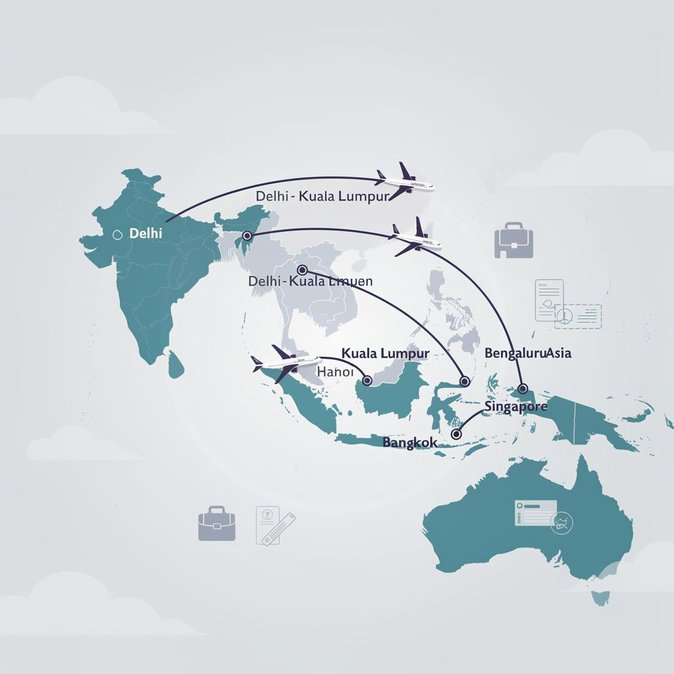
Fast-growing low-cost carrier IndiGo is deepening its South-East Asian footprint, announcing two new routes that will matter to Indian corporates with regional interests. From 20 December 2026 the airline will operate a daily Delhi–Kuala Lumpur service and launch Bengaluru–Hanoi on the same date, while also increasing frequencies on its Delhi–Bangkok and Delhi–Singapore sectors. The expansion aligns with New Delhi’s decision earlier this month to grant free e-visas to citizens of ASEAN member states – a move IndiGo executives say should stimulate inbound leisure and SME traffic. For outbound Indian travellers, Kuala Lumpur gains a low-cost non-stop alternative to Malaysia Airlines and AirAsia X, while Hanoi becomes Bengaluru’s first direct link to northern Vietnam, shaving at least three hours off itineraries that currently require a domestic hop via Ho Chi Minh City or Bangkok. Schedules released on GDS show the Kuala Lumpur flight departing Delhi late evening and returning overnight, ideal for day-one morning meetings in Malaysia’s capital and connections onward to Penang or Singapore. The Hanoi rotation slots into Bengaluru’s late-night international bank, arriving in Vietnam at dawn and enabling same-day transfers to industrial zones in Bac Ninh and Hai Phong. For mobility programmes, IndiGo’s entry is likely to pressure fares in peak winter season. Travel-management companies should refresh negotiated fare buckets and monitor whether corporates exceed policy caps by switching to full-service rivals to retain lounge access and through-check baggage. Duty-of-care teams should remind travellers that Vietnam still requires an e-visa, while Malaysia’s cost-free waiver for Indians expires on 31 December 2026, after which a paid e-visa will again be mandatory. IndiGo now operates more than 50 weekly flights from Delhi into South-East Asia and continues to court code-share partners for onward regional connectivity. Analysts expect further launches once the airline starts taking delivery of its longer-range A321XLR aircraft from late 2027.
Source: The Trip Keeper