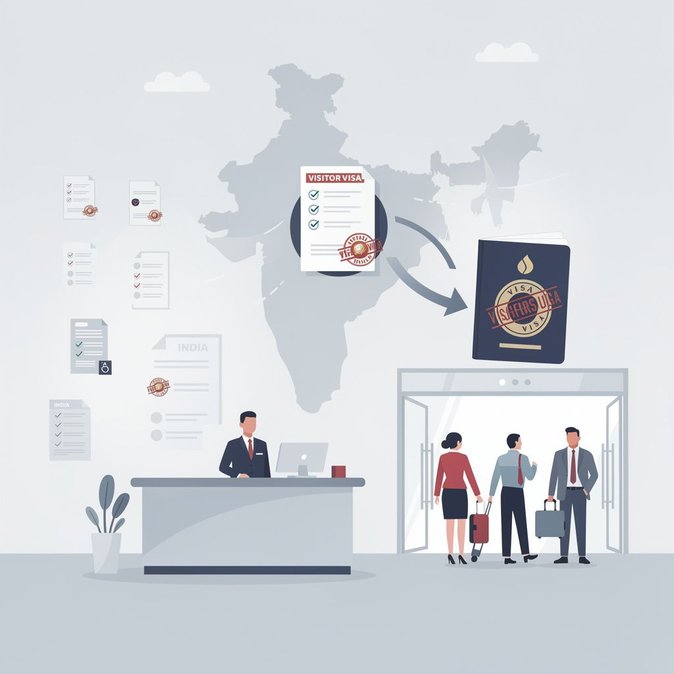
India has completed the biggest redesign of its visa framework in decades, collapsing 13 main visa classes into nine and slashing sub-categories from 49 to 23. The Bureau of Immigration (BoI) says the new structure – formally notified by the Ministry of Home Affairs and rolled out in phases from 22 November 2026 – is the capstone of a two-year rationalisation drive that began in 2025. Under the changes, the familiar Tourist Visa becomes a more versatile “Visitor Visa”, available in 30-day (V-1) and one-, five- or ten-year (V-2) versions that also cover short business meetings, wellness retreats, language courses and even mountaineering. Business travel has been clarified through B-1 (long-term investment) and B-2 (short-term contractual work) subclasses, while a purpose-built Production-Investment sub-route lets companies fly in foreign engineers or technicians on short notice. Medical travellers now receive one-year, multiple-entry M-1 or M-3 visas by default – a move hailed by private hospitals that struggled with repeat paperwork for follow-up visits. Students gain longer five-year e-visas tied to course length through a slimmed-down S-1 / S-2 split, and families can now move e-visas between passports online. Security agencies, meanwhile, get stronger powers to refuse entry, collect biometrics and fine carriers that land undocumented passengers. The application itself is leaner: BoI says 65-70 % of form fields have been eliminated, and an e-Arrival Card replaces the paper landing card. The entire system rides on the upgraded IVFRT platform that links 117 airports and seaports to local police and FRRO databases, with automated e-gates for Indians and Overseas Citizens of India already active at 13 airports. By year-end the new categories will also appear on India’s e-Visa portal, which serves nationals of 172 countries. For corporate mobility managers the message is clear: one broadly worded Visitor Visa will now cover most short-haul trips and medical contingencies, while specialised engineers can be moved under the B-2 Production-Investment route without ministry referrals. Travel-management companies expect faster turnaround once redesigned digital forms go live, reducing lost time on field staff assignments, conferences and after-sales service calls across India’s manufacturing hubs.