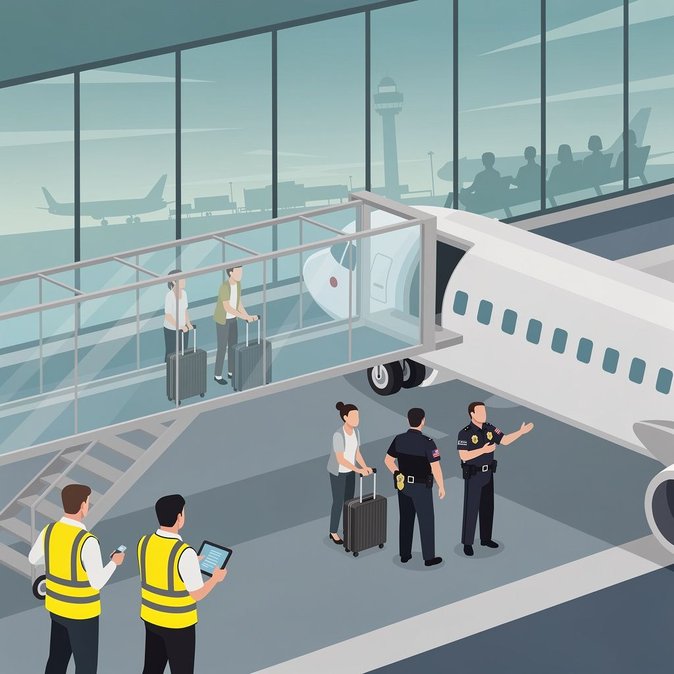
Passengers boarding Alaska Airlines Flight 1306 from Seattle-Tacoma International Airport late Saturday night were startled when half-a-dozen plain-clothes Immigration and Customs Enforcement (ICE) officers streamed onto the jet bridge and pulled two Mexican nationals off the aircraft. Video that quickly went viral shows one woman screaming that agents were taking her daughter even though she had a U-S work permit; another traveler, according to ICE, hurled hot coffee at officers. The ensuing commotion delayed the Los-Angeles-bound flight for more than an hour and forced airline staff to re-screen dozens of shaken passengers. ICE subsequently confirmed it had been executing a “targeted enforcement action” against Ricardo Larrondo Mendoza, who, the agency says, overstayed a visitor visa. Officers also detained a second passenger, Sofía Hernández Mejía, described as an undocumented overstay. Neither individual was considered a public-safety threat, raising questions among immigration advocates about the necessity of a high-visibility arrest in an active boarding area on one of the busiest holiday-travel weekends of the year. Washington Governor Hilary Ferguson, Seattle Mayor Bruce Harrell and Airport Director Lance Lyttle condemned the tactics within hours. Ferguson labeled the scene “distressing, dangerous and wholly unnecessary,” adding that state officials are exploring whether ICE failed to coordinate with local law-enforcement and port authorities, as required under a 2019 memorandum. Alaska Airlines issued its own statement complaining it received “no advance notice,” while the Association of Flight Attendants called for clearer federal guidelines governing immigration enforcement in secure zones. Civil-rights groups say the incident underscores broader concerns about ICE’s growing presence in transportation hubs. In the fiscal year that ended September 30, the agency carried out more than 1,600 so-called “transportation checks,” a 38 percent jump from 2025. Companies that rely on predictable boarding processes worry that surprise actions create operational and reputational risk. “No airline wants to be the next viral video,” notes industry analyst Henry Harteveldt. Airlines are now reviewing emergency-response protocols and asking DHS for advance-notification standards similar to those used by the U.S. Marshals Service when executing warrants on commercial flights. For business travelers, the immediate lesson is to build extra buffer time into itineraries during peak periods and to keep digital copies of immigration documents handy. Mobility managers should also brief assignees on their rights during encounters with federal officers: individuals generally may ask whether they are free to leave and may request a lawyer before answering non-routine questions. With holiday passenger volumes already near record levels, even a single enforcement action can ripple across multiple departures, making contingency planning essential.
Source: Associated Press