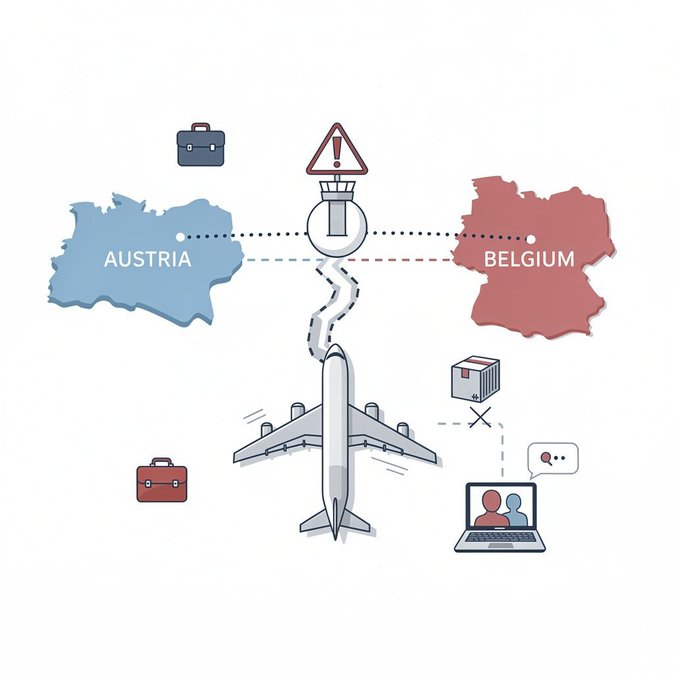
A one-day strike by Belgian air-traffic controllers has forced the cancellation of every commercial flight between Vienna International Airport (VIE) and Brussels Zaventem on Monday, 23 November. Austrian Airlines (AUA), Brussels Airlines and Ryanair confirmed that all 12 scheduled rotations were pulled after the Belgian provider Skeyes announced it could not guarantee minimum staffing levels. The walk-out is part of a broader national protest against the Belgian government’s austerity and pension reforms, but the late decision by controllers to join the action caught airlines off-guard. According to Vienna Airport’s live departures board, the first cancellations were posted shortly after 09:00 local time, leaving hundreds of business travellers and EU officials scrambling for alternatives. Rail connections via Frankfurt and Paris quickly sold out, while charter operators reported a spike in last-minute enquiries for executive jets. For mobility managers, the disruption highlights the fragility of short-haul links that underpin Austria’s participation in EU politics and the international conference circuit. Brussels ranks among Vienna’s top five corporate destinations, carrying a high proportion of same-day return passengers. Companies with posted workers who rely on the EU’s Posted Workers Directive to attend meetings in Brussels may need to revisit contingency planning, including flexible tickets on the Vienna–Amsterdam route with Thalys onward rail, or virtual attendance protocols. Austrian Airlines said affected passengers could rebook within seven days or request refunds, but warned that seat availability later in the week is limited because of US Thanksgiving traffic spilling into European hubs. Travel-risk advisers recommend that travellers retain boarding-pass screenshots and cancellation notices to support EU261 compensation claims, though carriers may argue force majeure given the strike’s sovereign nature. While Skeyes insists normal service will resume at 06:00 on Tuesday, union representatives have not ruled out further action in December. With Europe’s winter negotiating season under way, global mobility teams should monitor labour-relations developments at key transit hubs and flag high-priority trips for proactive re-routing.
Source: MeinBezirk