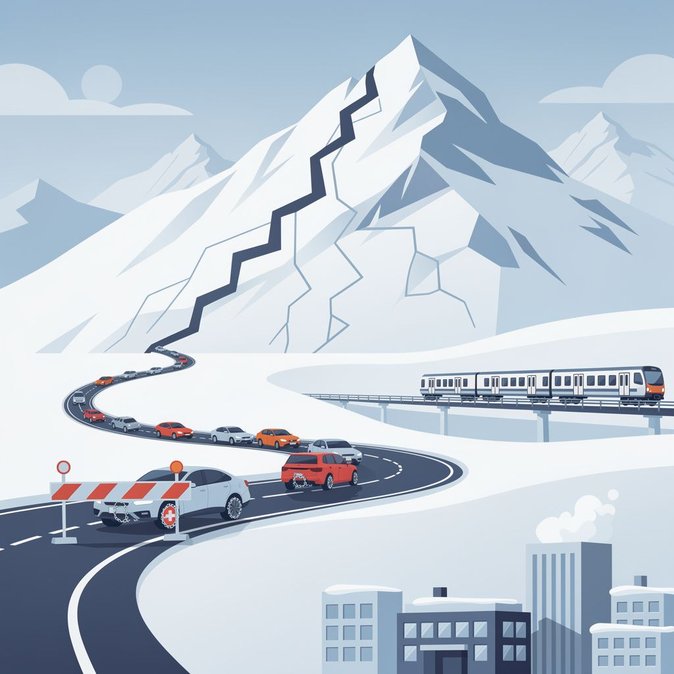
The Swiss Institute for Avalanche Research (SLF) has raised the danger level to four (second-highest) across a belt stretching from the Valais to the Glarus Alps for Monday, 23 November. Continuous snowfall over the weekend dumped up to 70 cm of fresh snow above 1,800 m and caused multiple spontaneous slides overnight. The Bernina Pass closed for two hours on Sunday evening after cars skidded off the icy roadway; the Albula, Oberalp and Simplon passes now require snow chains for all vehicles. SBB reports that the Glacier Express route between Andermatt and Sedrun is running at reduced speed, adding 20 minutes to journey time. Postal coaches in the Upper Valais have been replaced by minibuses with four-wheel drive. For companies rotating staff to mountain project sites, the practical advice is to switch to rail where possible, pre-book chain-equipped rental cars and build at least half a day of slack into itineraries. The SLF bulletin notes that natural avalanches may reach roads even below 1,600 m—good reason for mobility managers to suspend non-essential field trips on north-facing slopes. Insurance providers warn that ‘business necessity’ must be documented if employees drive into level-4 zones; otherwise accident claims can be challenged. Hotels in low-risk valleys such as the Rhone plain and the Surselva report a surge in same-day bookings from contractors forced to stay off the passes. Although early-season snow is common, the combination of heavy precipitation and a thin base layer has made this episode unusually unstable. Employers with winter assignments should revisit their Alpine travel policies before the Christmas peak.
Source: DeepArrival Travel Intelligence