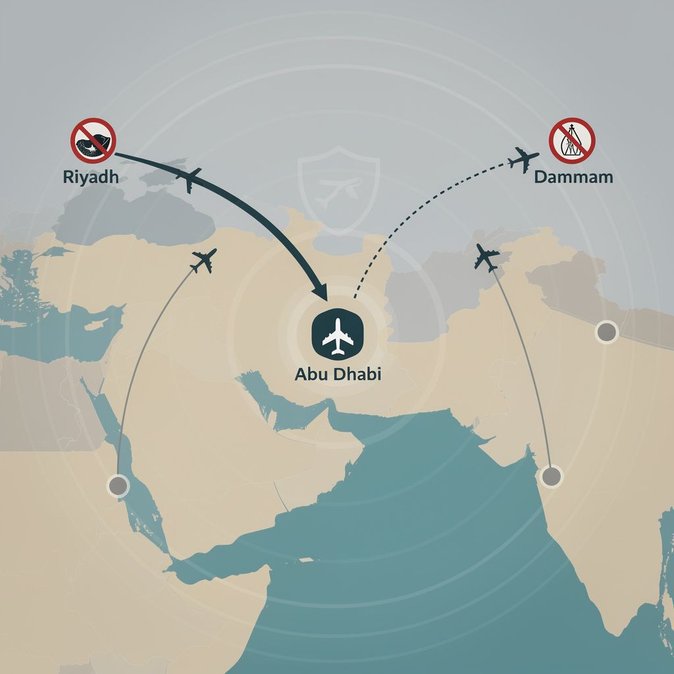
Etihad Airways has confirmed that all passenger and cargo flights between Abu Dhabi and the Saudi Arabian cities of Riyadh and Dammam will remain suspended until Monday, 30 November. The carrier told agents and passengers that the decision is a precautionary response to “regional disruption” and that operations could change again at short notice. Etihad’s services to Jeddah, Medina and other Saudi gateways continue, but seat availability is tight as travellers scramble for alternatives. The extended cancellation is the latest in a rolling series of schedule changes made by Gulf carriers since mid-October, when missile and drone activity in Saudi airspace prompted airlines to review risk assessments. The European Union Aviation Safety Agency (EASA) widened its conflict-zone bulletin on 16 November, advising operators to exercise “extreme caution” below FL260 over the kingdom; that notice now runs to 31 January 2027. Corporate travel managers with crews or executives transiting the Gulf should reconfirm each sector and build in longer connection windows. Although Emirates and flydubai continue to serve Riyadh on a reduced schedule, last-minute seat inventory is scarce and premium fares have risen by more than 40 per cent week-on-week, according to GDS snapshots taken on 24 November. Freight forwarders are also diverting high-value shipments via Bahrain and Kuwait to avoid ground-handling bottlenecks in Saudi Arabia. The knock-on effects reach beyond the GCC. Australia’s Smartraveller service renewed its “Do Not Travel” warning for Saudi airports on 21 November, and several European carriers still require special approval for crew lay-overs in the kingdom. Mobility teams relocating staff to Saudi projects are therefore routing via Doha or Muscat and building remote-work clauses into assignment letters. Etihad advises ticket-holders to rebook without penalty or request refunds through the original point of sale. For UAE-based businesses, the episode is a reminder of how quickly regional security can upend carefully planned itineraries. Employers with cross-border operations should keep travel policies flexible, subscribe to real-time security feeds and maintain contingency budgets for sudden route changes.
Source: Travel Monitor