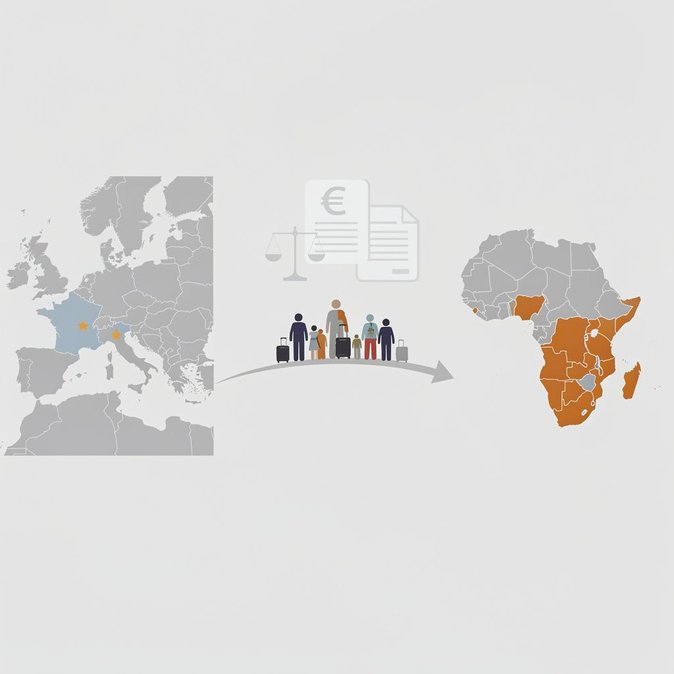
Cyprus has moved a step closer to outsourcing part of its migration-management workload. Appearing before parliament on 24 November, Interior Minister Constantinos Ioannou confirmed that Nicosia is assessing whether to sign up to a five-country initiative that would see rejected asylum-seekers and migrants without residence rights transferred to a dedicated “return hub” in Rwanda. Austria, Denmark, Germany, Greece and the Netherlands unveiled the project in Vienna on 16 November and have begun exploratory talks with Kigali. The first transfers are pencilled in for 2027. Ioannou told MPs that the Deputy Ministry of Migration and International Protection is conducting a rapid legal, financial and human-rights review before the Cabinet takes a political decision. The proposal rests on EU Regulation 2026/2280, which for the first time allows Member States to conclude joint return arrangements with third countries that meet non-refoulement standards. Crucially, children, unaccompanied minors and families are excluded from the scheme, and only persons who have already received a final removal order would be eligible for transfer. If Cyprus joins, the island would gain an additional tool for enforcing thousands of outstanding return decisions—an area where front-line Member States often struggle because of limited detention capacity and non-co-operation from countries of origin. Faster removals would free up reception facilities, relieve pressure on social-welfare budgets and send a deterrent signal to new arrivals. For businesses that rely on the asylum system to regularise staff shortages, the impact should be limited: the hub targets only failed applicants, not those with pending claims or valid residence permits. Migration lawyers say companies should nonetheless monitor the policy. Staff whose claims have been finally rejected could be moved out of Cyprus more quickly once the hub is operational, shortening the window in which employers can regularise them through labour-market channels. Conversely, swifter returns may ease political resistance to legal labour-migration programmes that businesses want expanded. The Deputy Ministry is expected to publish its cost–benefit analysis in early 2027. Until then, no transfers are imminent, but HR teams are advised to audit the immigration status of all third-country employees and keep renewal dates under close review.
Source: info.cy