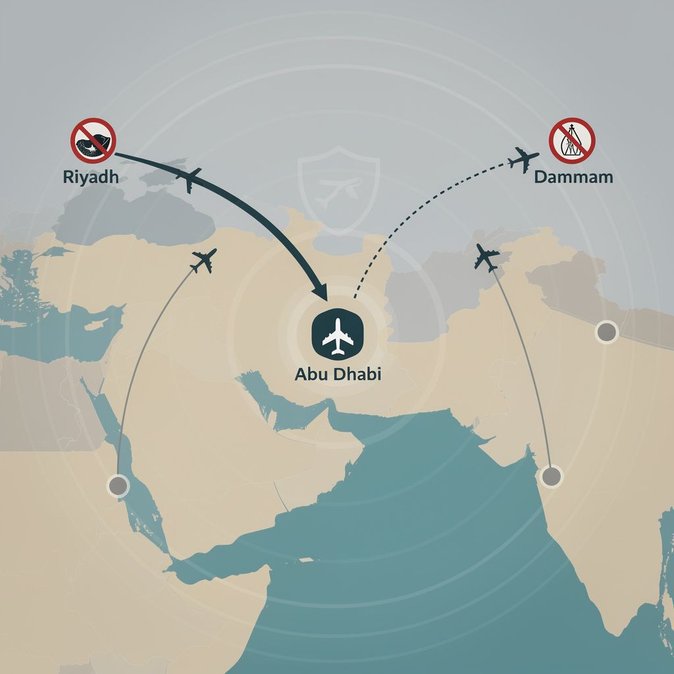
Travellers to and from the UAE faced another difficult day on 25 November 2026 as a spike in regional security alerts prompted multiple carriers to adjust schedules. Gulf News reports that Etihad Airways has extended the suspension of its Abu Dhabi-Riyadh and Abu Dhabi-Dammam services until at least 30 November, while Indian carriers IndiGo and Air India have prolonged their Saudi flight cancellations. Sharjah-based Air Arabia has also axed selected services to Abha and Riyadh. The disruption follows renewed drone and missile activity in neighbouring states and a US Embassy advisory warning American citizens in the Gulf to expect short-notice air-space restrictions. Although Dubai International Airport (DXB) remained operational, analysts note that the Saudi market accounts for roughly 8 percent of seat capacity out of the UAE; prolonged suspensions therefore carry both economic and operational consequences. In better news for corporate travel planners, Germany’s Lufthansa Group confirmed a phased restoration of its Dubai network from 25 November, reinstating flights from Frankfurt, Munich, Zurich and Berlin. The return of a major European alliance partner restores critical connectivity for Gulf-Europe itineraries just ahead of the UAE’s National Day peak and the year-end holiday rush. Travel-risk firms are advising employers to keep itineraries flexible, monitor airline channels rather than third-party apps, and budget additional time for security screening at DXB and AUH. Where routings rely on Saudi connections, companies should confirm that onward flights are operating and consider Muscat or Doha as interim hubs. While regional volatility is hardly new, the current spike underlines the importance of dynamic travel policies. Enterprises with frequent Middle-East rotations should ensure employee-tracking tools are updated in real time, that staff are briefed on contingency routings, and that supplier contracts allow cost-neutral rebooking when flights are cancelled for security reasons.
Source: Gulf News