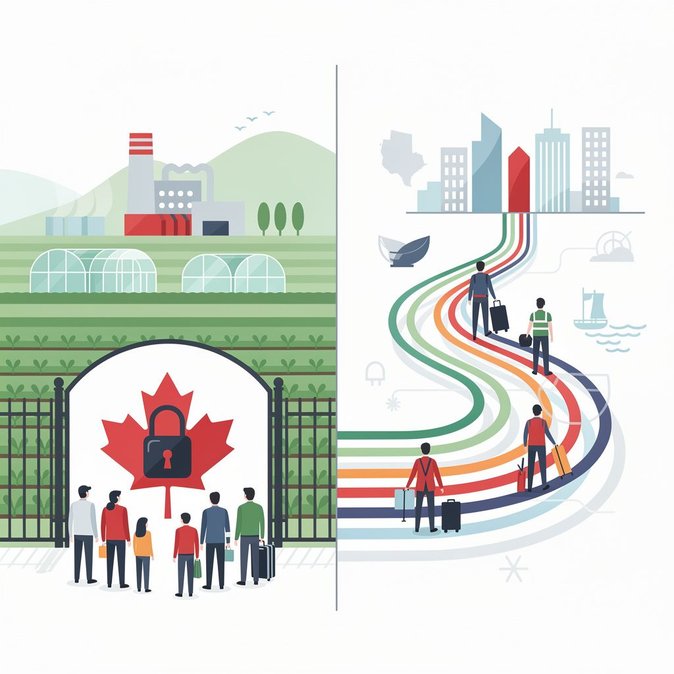
In a House of Commons debate on 24 November, Immigration Minister Lena Metlege Diab defended the government’s 2027 permanent-resident plan, arguing that most of the additional 662,000 admissions projected for that year are people already living in Canada. An IRCC.com policy update published 25 November summarises the exchange, noting that Conservative MPs tabled a motion to reject the 2027–2029 Immigration Levels Plan on grounds of housing and health-care capacity. The non-binding vote is expected later this week. Diab stressed that the headline figure combines three layers: the base target of 380,000 admissions, a time-limited measure for up to 200,000 workers and humanitarian cases already in Canada, and carry-overs from earlier one-off programs. She told MPs that up to half of the one-time spaces will lapse unless provinces opt in, and that “no new arrival” is counted when a temporary resident transitions to permanent status. The opposition counters that the aggregate number still exerts pressure on services and ignores the country’s housing shortfall. The Bloc Québécois signalled support for the motion, citing Quebec’s own capacity limits and language-training burden. Stakeholders expect the Liberals to defeat the motion, but the political heat may foreshadow tighter provincial negotiations over nomination allocations and settlement funding. For employers, the debate underscores policy uncertainty around transition programs that convert temporary workers to permanent residents. Companies relying on Post-Grad Work Permit or International Mobility Program staff should monitor whether provinces accept their share of the 100,000 worker spaces, as refusal could strand employees in temporary status. The episode also hints at possible amendments to the Levels Plan in 2027-2029; talent teams should scenario-plan for both higher and lower admission allotments, especially in francophone or regional streams where provincial consent is pivotal.
Source: IRCC.com