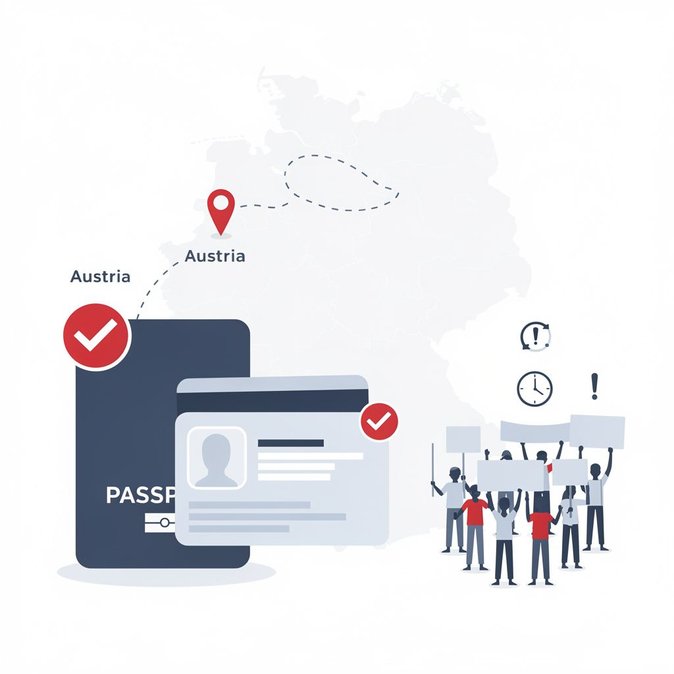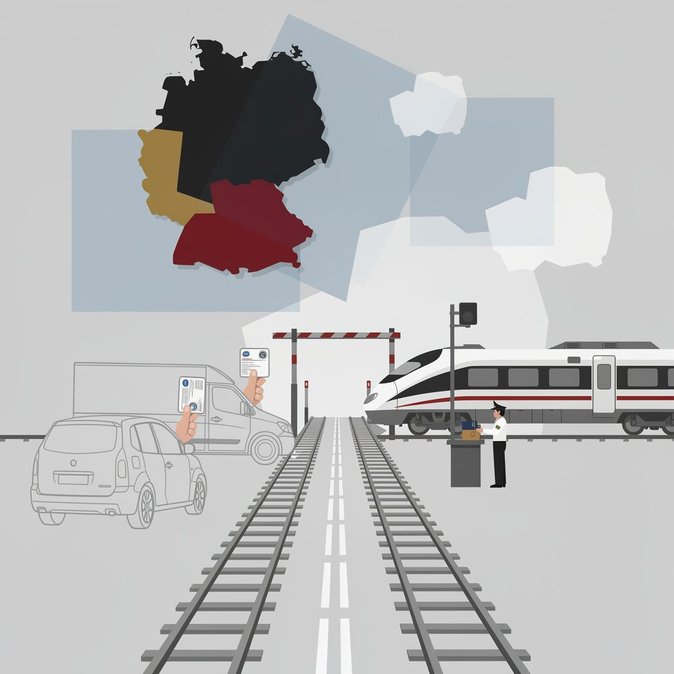
Business travellers driving or taking the train across Germany’s normally control-free frontiers should plan for continued spot checks well into next year. According to an immigration alert published on 24 November 2026, Germany has notified Brussels that it will maintain temporary controls at all of its land borders—especially with Austria, Czechia, Poland, Switzerland, France, Denmark, the Netherlands, Belgium and Luxembourg—through the next six-month cycle allowed by the Schengen Border Code. Similar extensions were filed by Austria, Denmark, France, Italy, Poland, Sweden and Norway, meaning that eight of the 27 Schengen members will keep policing their internal borders until dates ranging from March to June 2027. For companies moving staff around Europe, the measure chiefly translates into slower road and rail crossings and the need to carry passports or EU national ID cards at all times. Visa-exempt nationals on short business trips must still respect the “90/180-day” Schengen limit; overstays picked up during a border check can trigger fines or entry bans. Freight traffic has also been affected, with German logistics associations reporting queue times of up to 35 minutes at the Bavarian–Austrian crossings during the morning peak. Berlin argues that persistent irregular migration flows and cross-border people-smuggling networks justify the controls. The European Commission, while reiterating that internal checks should remain “a measure of last resort,” has not challenged the latest German notification. Under the amended Schengen Border Code that entered into force in 2024, member states can roll over internal controls for up to two years if they provide a detailed risk assessment every six months—something Germany has done since 2024. Practical tips: travellers should factor in extra transit time, keep original travel documents (not scans) within reach, and have proof of accommodation or assignment letters ready if asked. EU citizens using only a driving licence should note that it is not recognised as a travel document at a border post. Companies that rotate non-EU assignees across multiple Schengen countries should re-check remaining visa-free days before dispatching them through Germany. If the security rationale persists, observers expect the controls to be prolonged again into the second half of 2027, effectively normalising on-the-spot ID checks on what was once Europe’s most open frontier.
Source: Fragomen Immigration Alert