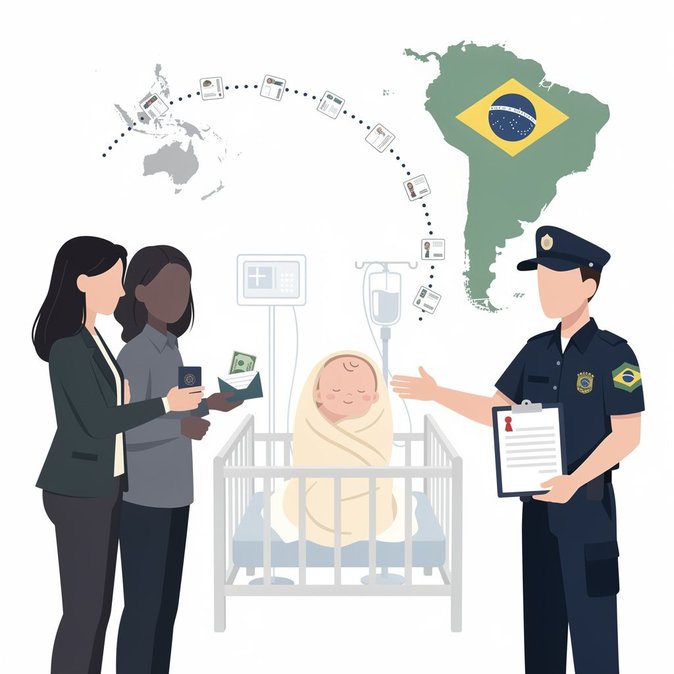
Rio de Janeiro state police arrested a New Zealander and a Chinese national in Saquarema on 24 November (announced 26 November) for allegedly orchestrating an illegal cross-border surrogacy network. Investigators say the pair paid pregnant Thai women more than R$ 120,000 each to deliver babies in Brazilian hospitals, exploiting Brazil’s relatively permissive birth-registration rules to obtain local birth certificates that facilitate onward emigration of the infants. According to Chief Inspector Vilson de Almeida, embryos using Chinese genetic material were implanted in Thai surrogates, who then entered Brazil in the late stages of pregnancy on tourist visas. After birth, the biological father would fly in to register the child, enabling the newborn to exit Brazil using Brazilian documents and acquire another citizenship abroad. The suspected destination markets include China—where commercial surrogacy is illegal—and New Zealand. Police executed search warrants at two rented beach properties, seizing medical records, migration documents and R$ 300,000 in cash. The case has reignited debate over loopholes in Brazil’s 2017 Migration Law and in hospital reporting mechanisms that allow late-term foreign arrivals to give birth with limited scrutiny. From a global-mobility standpoint, the incident highlights the reputational and compliance risks for clinics and facilitators operating cross-border reproductive-services businesses. Legal experts predict the Ministry of Justice will issue new guidance tightening visa screening for late-term pregnancies and may require hospitals to notify the Federal Police of non-resident births. Employers with expatriate benefit packages covering assisted reproduction should monitor the investigation, as any future regulation could impact coverage parameters or require proof of medical necessity for surrogacy services obtained in Brazil.
Source: Portal AZ