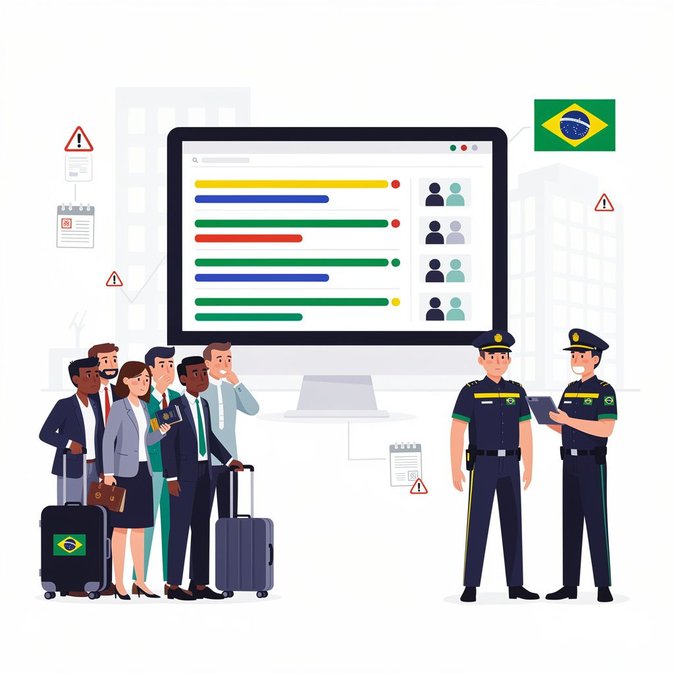
On 26 November, the Federal Police (PF) published more than a dozen deportation and expulsion notices on its public migration portal within a single news cycle—a volume officials attribute to the full rollout of its new e-Migration workflow introduced this quarter. The cases include a Gabonese minor overstaying a humanitarian visa, a Dutch tourist who evaded border control and multiple overstays that triggered fines of up to R$ 10,000. The automated platform consolidates data from border posts, state courts and Interpol alerts, allowing regional migration units to generate electronic notifications and countdown clocks for voluntary departure or appeal. Previously, physical notices had to be served by mail, often expiring before delivery; the PF says the digital process cuts average case time from 90 to 20 days. Although most proceedings involve individual tourists or seafarers, corporate immigration advisers warn that foreign employees who change employers without updating their residency category are increasingly flagged by the system. The PF can now match tax-ID activity and social-security payments against visa status in real time, exposing shadow-payroll arrangements. Companies are advised to audit assignment records, confirm that digital RNM cards have current employer details, and monitor the PF portal for any notices issued in absentia. Failure to respond within the 10-day window can lead to automatic inclusion on the national entry-ban list for two years. The Ministry of Justice has hinted that the same architecture will underpin Brazil’s long-delayed ETA (Electronic Travel Authorisation) for low-risk nationals, slated for pilot launch in mid-2027—making compliance with the new digital ecosystem a strategic priority for mobility teams.