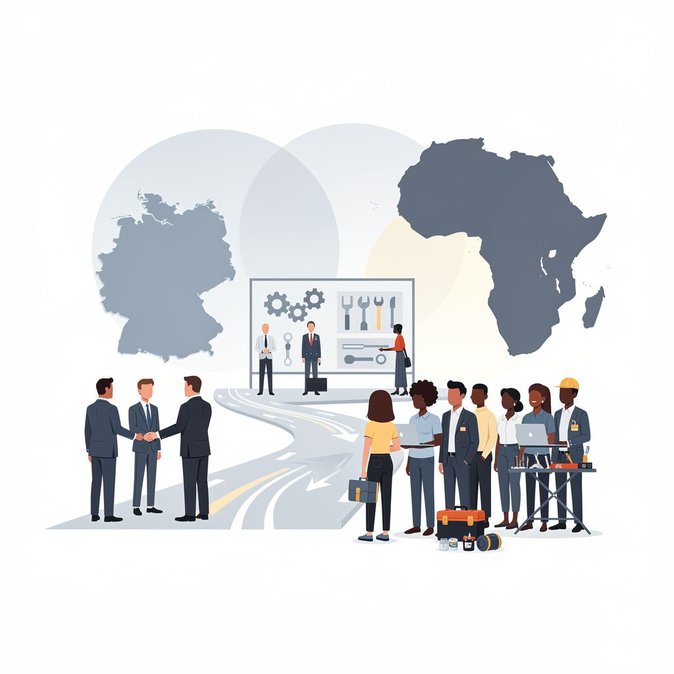
On the final overseas trip of his presidency, Frank-Walter Steinmeier visited Côte d’Ivoire, Ghana and Kenya this week and urged German firms to invest more boldly in African markets—emphasising vocational partnerships that channel qualified graduates to Germany’s labour market. Speaking at the German-African Business Summit in Accra on 26 November 2026, Steinmeier highlighted bilateral migration and mobility pacts signed since 2024 and lauded the 9,500 Kenyans already working in Germany under fast-track skilled-worker rules. “We want to create regular, fair and orderly pathways for labour migration,” he said, adding that demand for technicians, health-care staff and IT talent in Germany far exceeds domestic supply. During visits to a mechanics training college in Abidjan and a vocational school in Nairobi, the president stressed the value of dual-training models that combine German curricula with local instruction. Pilot “Global Skills Partnership” projects—funded by the Federal Ministry for Economic Cooperation and Development and companies such as Bosch Africa—equip trainees with German-language and industry certifications before departure, shortening onboarding times for employers in Germany. For HR and global-mobility managers the message is clear: Africa is becoming a strategic recruitment pool as Germany’s new Skilled Immigration Act lowers salary thresholds and recognises foreign vocational qualifications. Early engagement with training providers in origin countries can secure talent pipelines and mitigate visa-processing bottlenecks. Steinmeier’s remarks also carry geopolitical weight. He warned that German businesses risk losing ground to Chinese and Gulf-state investors who move faster despite higher risk. Facilitating ethical mobility pathways, he argued, can underpin sustainable economic ties, help African nations alleviate youth unemployment and support Germany’s competitiveness in the race for talent.
Source: Deutsche Welle