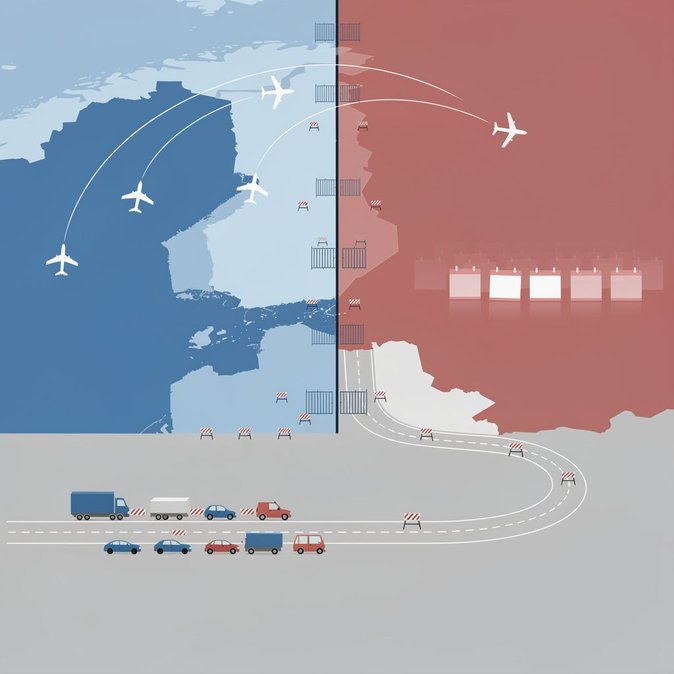
Finland will maintain its unprecedented closure of all eight land border crossings with Russia for a further two years after the government decided on 26 November to prolong the measure until 31 December 2028. The extension, which President Alexander Stubb is expected to sign into law this weekend, means the eastern frontier—1,340 km long and previously the busiest external Schengen land border—will have been shut to almost all passenger traffic for five consecutive years. Helsinki first sealed the crossings in December 2023 after a sudden spike in asylum seekers from the Middle East and Africa arrived via Russia. Finnish intelligence services say the phenomenon was orchestrated by Moscow to destabilise the newly-minted NATO member, and officials now label it a form of “instrumentalised migration”. Although the numbers of attempted crossings fell sharply once the gates were locked, the Interior Ministry argues that the threat could re-emerge at short notice and that deterrence is therefore essential. Under the decision, freight trains and the dedicated St Petersburg–Helsinki Allegro passenger service—already suspended—remain off-limits, and only tightly-screened humanitarian or family-reunification cases will be considered for entry. Russian citizens in possession of valid Schengen visas issued by other states will continue to be turned away if their journey originates in Russia. Carriers have been told to factor in the closure when planning winter timetables, while logistics firms are rerouting cargo via the Baltic States and Sweden. Business travellers should anticipate longer lead times and higher costs for road and rail freight diverted through alternative corridors. Companies with operations on both sides of the border must rely on limited air links via Istanbul, Belgrade or Dubai, where demand for seats has already pushed average fares 40–60 percent above 2022 levels. Employers are advised to review assignment policies, since staff holding dual Finnish–Russian nationality may still face secondary screening when leaving or re-entering Finland. Politically, the move underscores the hardening of Finland’s Russia policy since the full-scale invasion of Ukraine. It aligns with a broader Nordic trend: Estonia has banned entry to almost all Russian citizens, and Sweden re-introduced temporary internal border controls earlier this month. The European Commission has not challenged the Finnish closure, signalling tacit approval of extraordinary border restrictions in the face of hybrid threats.
Source: The Moscow Times