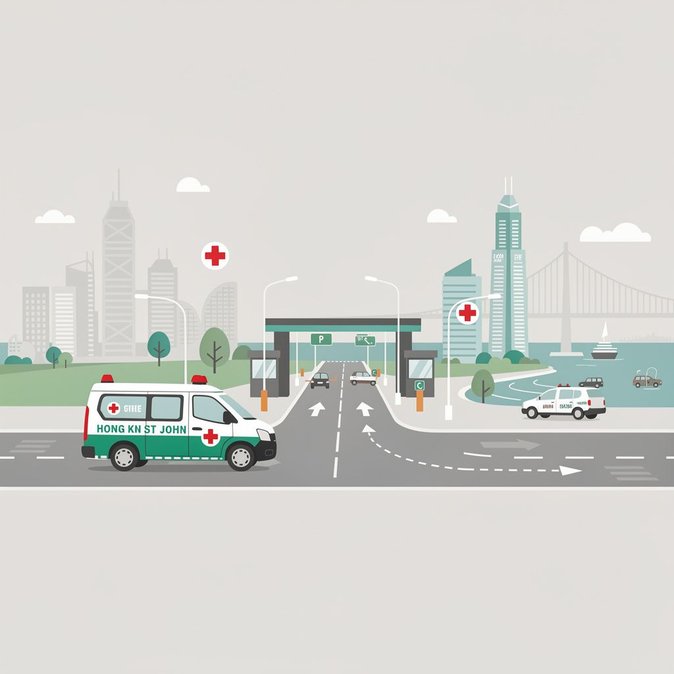
Hong Kong took a visible step toward frictionless emergency mobility in the Greater Bay Area (GBA) on 27 November when a St John Ambulance vehicle drove north across the Hong Kong-Zhuhai-Macao Bridge as part of a live drill for the Pilot Scheme on Direct Cross-boundary Ambulance Transfer. The exercise—co-ordinated by health authorities in Hong Kong, Guangdong, Zhuhai and Macao—simulated the transfer of patients to Zhuhai People’s Hospital and Macao’s Conde S. Januario Hospital. Customs and immigration checks were practised at both the Zhuhai and Macao border facilities, testing paperwork workflows, real-time data exchange and vehicle-escort protocols. Health Secretary Professor Lo Chung-mau, who observed the drill, called the smooth run-through “a milestone toward a Healthy Bay Area”. Launched in late 2024, the pilot has so far enabled 33 actual patient transfers—30 into Hong Kong and three to mainland hospitals—but until now used only Guangdong- or Macao-registered ambulances. Allowing Hong Kong units to operate across the bridge will shorten hand-over times, remove stretcher-to-stretcher transfers at control points and ultimately raise survival rates for time-critical cases such as cardiac arrest or severe trauma. For mobility and relocation managers, the scheme reduces one of the hidden frictions of deploying staff to multiple GBA jurisdictions: emergency medical evacuation. Firms employing cross-border commuters or stationing staff in satellite offices around the Pearl River Delta will benefit from faster, paperwork-light patient routing to centres of excellence on either side of the boundary. The Health Bureau said phase-two enhancements will include digitised pre-clearance of crew manifests and alignment of medical-device standards so that defibrillators, ventilators and other life-support systems can stay powered during border crossings. Stakeholders expect a formal policy circular early in 2027 setting out permanent operating rules and insurance guidelines.
Source: HKSAR Government Press Release