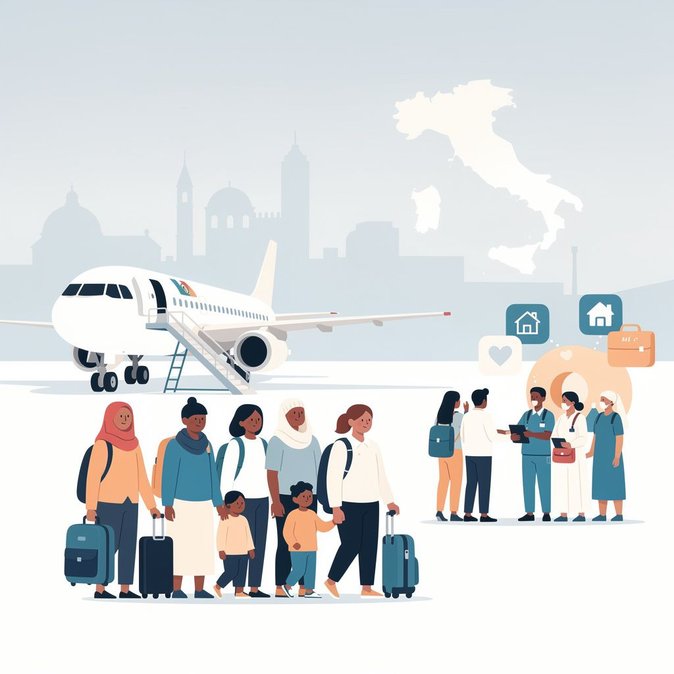
A charter flight touching down at Rome Fiumicino on 26 November 2026 carried 131 refugees evacuated from detention centres in Libya under Italy’s humanitarian-corridor programme. The initiative—run jointly by the Italian government, the Community of Sant’Egidio, the Federation of Evangelical Churches in Italy (FCEI), Caritas and UNHCR—offers legal entry and immediate protection to people fleeing war and persecution, bypassing the dangerous Central Mediterranean crossing. The new arrivals, mostly families with young children from Eritrea, Sudan and Syria, were welcomed by volunteers who will accompany them to reception facilities in Lazio, Tuscany and Emilia-Romagna. Within two months they will receive residence permits on humanitarian grounds, enroll in language courses and be matched with hosts or community housing while they begin integration and job-placement programmes. Italy has operated humanitarian corridors since 2016 and has now transferred more than 7,000 vulnerable people—1,050 of them from Libya in the past three years—without a single life lost at sea. Interior Ministry officials say corridors complement, rather than replace, EU relocation and resettlement schemes, but NGO partners argue that the government should scale the quota from the current 1,500 to at least 5,000 places per year to reduce irregular departures. For employers, the arrivals expand the pool of job-seekers eligible for work permits outside the annual “decreto flussi” quota, once language and training hurdles are overcome. Several regional Chambers of Commerce have already offered apprenticeships in the agri-food and care sectors, areas facing acute labour shortages. The programme also gives companies a safe-migration success story to reference in ESG and diversity reporting.
Source: L'Osservatore Romano