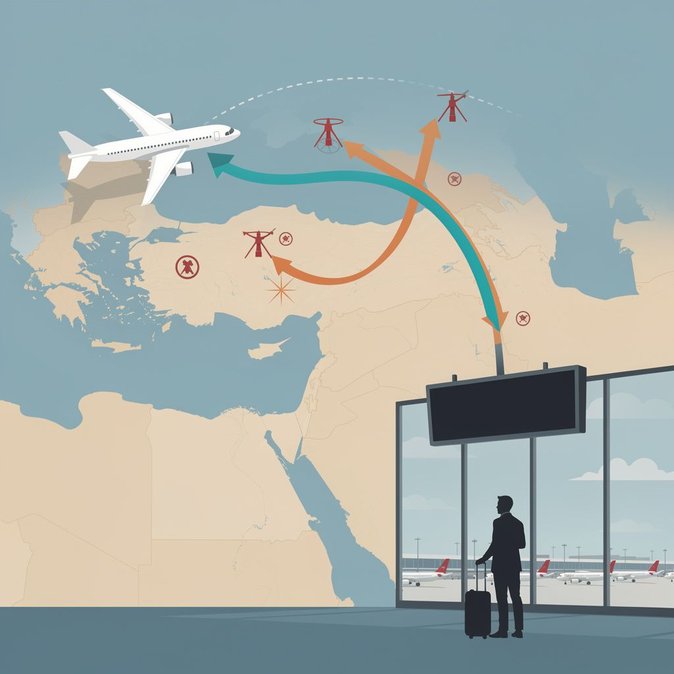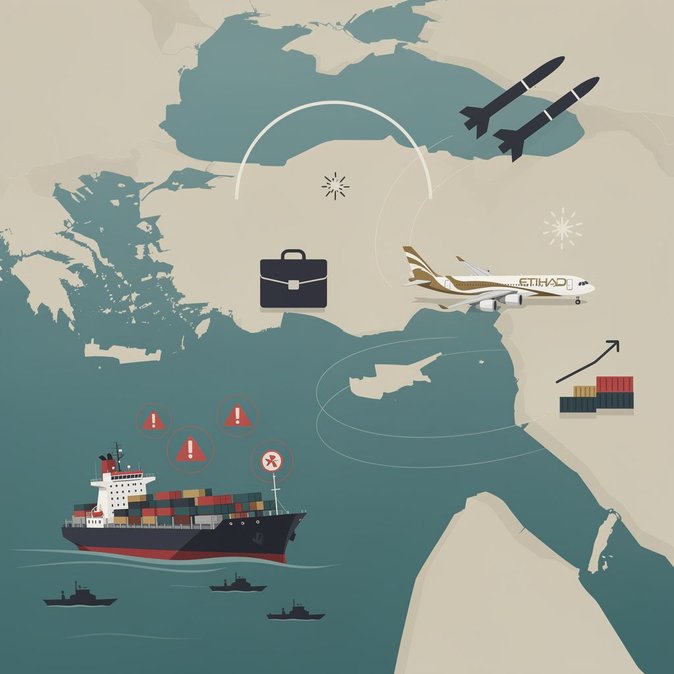
A wave of security incidents across the Gulf on 28 November 2026 has prompted fresh guidance for travellers and companies with operations in the United Arab Emirates. Gulf News summarised five developments that matter most to UAE residents: a hijacked cargo vessel off the coast of Yemen, a Saudi interception of a Houthi cruise missile aimed at Riyadh, a US strike that disabled a merchant ship trying to breach Washington’s blockade of Iranian ports, extended flight suspensions by Etihad Airways on its Riyadh- and Dammam-routes, and oil-price volatility driven by maritime risks. The hijacking – swiftly resolved when assailants abandoned the ship – underscores the fragile security environment around the Bab al-Mandab and Gulf of Aden shipping lanes. For UAE importers and logistics providers, each incident raises war-risk insurance premiums and lengthens routing times, squeezing already-tight freight margins. Multinational firms are reassessing supplier contracts that rely on just-in-time delivery through these corridors, and are advising regional staff to monitor UKMTO and International Maritime Security Construct (IMSC) bulletins. Aviation has felt the impact most directly. Etihad’s decision to keep Abu Dhabi–Riyadh and Abu Dhabi–Dammam services grounded until at least 31 December reduces seat capacity by roughly 8 % on the key corporate travel corridor between the UAE and Saudi Arabia. Travel-management companies report surging fares on remaining links via Bahrain and Qatar, while charter operators are fielding short-notice requests from energy, defence and professional-services clients. Other Gulf carriers, including flydubai and Air Arabia, continue to adjust schedules daily, which complicates mobility planning for expatriate project teams. Corporate mobility managers should update risk assessments to reflect the European Union Aviation Safety Agency’s standing recommendation that operators avoid over-water portions of the Persian Gulf FIRs except for arrivals and departures. Travellers bound for Saudi Arabia are being advised to reconfirm airport of arrival, as several foreign carriers are using Jeddah as a substitute for Riyadh. Employers should also brief staff on potential delays to final-mile delivery of critical equipment if congestion at Jebel Ali Port worsens. In the medium term, sustained insecurity could accelerate Dubai-based multinationals’ contingency plans to reroute supply chains through Oman’s Duqm Port or overland via Jordan. Human-resources teams are already fielding queries from employees concerned about family travel over the upcoming National Day holiday; clear communication on insurance coverage, ticket flexibility and emergency contacts will be essential.
Source: Gulf News