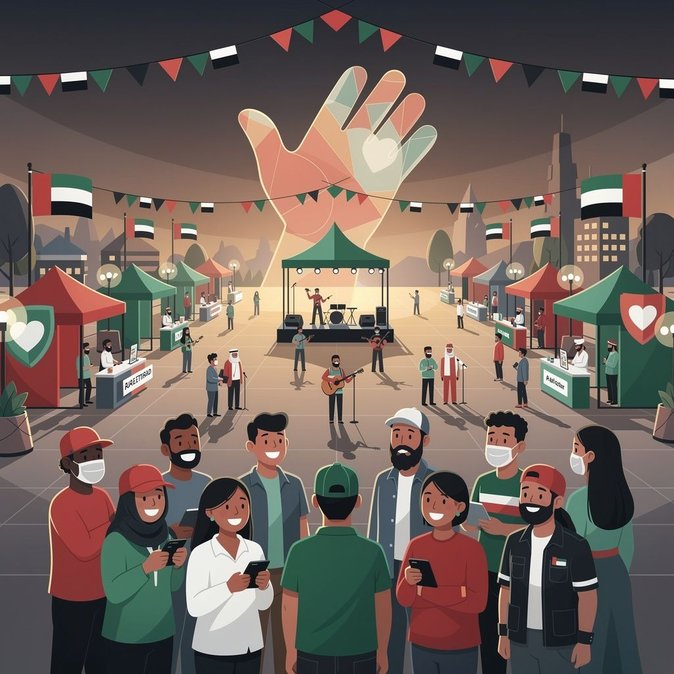
The Ministry of Human Resources and Emiratisation (MoHRE) announced that more than 40 sites across all seven emirates will host dedicated Eid Al Etihad festivities for blue- and white-collar workers on 2–3 December 2026. Partners include the Ministry of Interior, the Federal Authority for Identity, Citizenship, Customs and Port Security (ICP), police commands and municipal authorities, underscoring how labour welfare has become a whole-of-government priority. Under the banner “Our Workers’ Happiness in Our Union’s Celebration”, the programme offers sports tournaments, concerts, legal-aid booths and prize draws (including a car) at labour villages and industrial zones. Large private employers such as DAMAC and Sobha are contributing through corporate-social-responsibility sponsorships, while logistics providers are supplying free shuttle buses. The initiative is designed to reinforce the UAE’s message that expatriate talent— who make up roughly 85 % of the workforce— is integral to national development. For global mobility managers, the celebrations signal a favourable policy environment: MoHRE officials often use such events to publicise upcoming reforms to the Wage Protection System, Occupational Health & Safety rules and mid-skill residence permits. Last year’s Eid Al Etihad festival preceded the introduction of mandatory health insurance in the Northern Emirates; observers expect fresh guidance on the anticipated portal that will consolidate work-permit renewals with Emirates ID services. Practical considerations for employers include potential traffic restrictions around large accommodation complexes and the need to coordinate shift patterns so staff can participate. Companies that voluntarily sponsor on-site booths — offering financial-literacy or language-training sessions, for example — will accrue points under MoHRE’s Tawteen employer-rating system, which can translate into faster quota approvals. From an employee-engagement perspective, visible support for national celebrations bolsters retention, particularly among shop-floor workers who often have limited recreational options. HR teams should circulate schedules in multiple languages, arrange transport, and remind staff of public-behaviour norms at large gatherings. Participation also provides an opportunity to audit workforce-well-being programmes ahead of the mid-2027 introduction of the UAE’s new Corporate Sustainable Development reporting standards.
Source: Emirates News Agency (WAM)