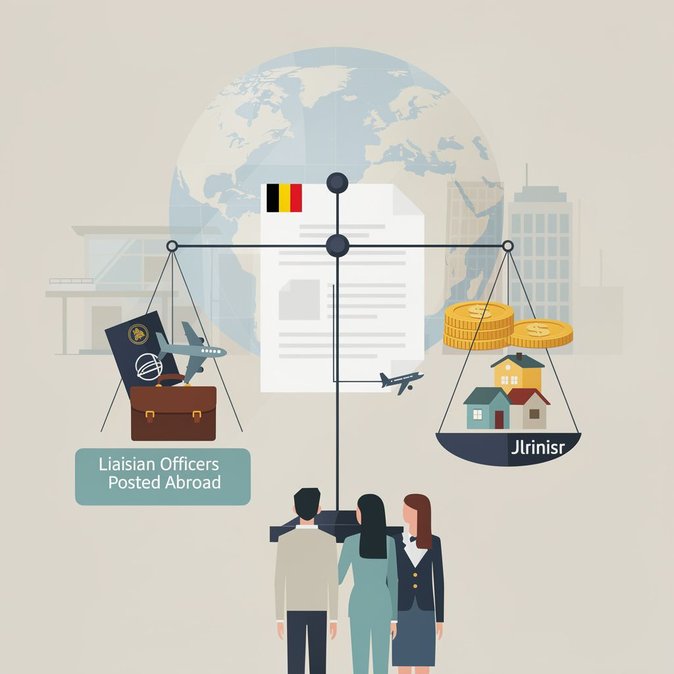
The Belgian Council of Ministers on 27 November green-lighted a draft Royal Decree that overhauls the system of allowances and expense reimbursements for officers of the Sûreté de l’État (State Security) assigned on long-term postings overseas. Until now, the group relied on a 2006 ministerial order whose vague wording caused inconsistent treatment and frequent disputes over what costs – housing, schooling, medical, home leave – could legitimately be claimed. Justice Minister Annelies Verlinden told reporters the new decree mirrors the updated Foreign Ministry scale, creating parity with diplomats and eliminating what she called “grey zones” that exposed the state to legal challenges. Under the proposal, liaison officers will receive a transparent cost-of-living index, education grants for dependent children and a clear schedule of relocation and repatriation expenses. A hardship supplement can be authorised for high-risk locations, while digital-nomad or hybrid-work arrangements are explicitly excluded to preserve operational security. The draft now goes to unions for consultation before being sent to the Council of State for legal vetting, but officials say they aim for the rules to enter into force on 1 January 2027. For multinational firms, the decree is a useful benchmark because State Security expatriation packages often influence the wider Belgian public-sector market and, by extension, salary surveys used by private-sector mobility policies. The text’s alignment with Foreign Affairs scales is likely to raise expectations among commercially-seconded Belgian staff, particularly in hardship postings where companies already face attraction and retention challenges. Practical takeaway: HR teams should review their own foreign-assignment allowances to ensure competitiveness and internal equity once the decree takes effect. Where corporate packages lag behind the new public-sector standard – especially on schooling and COLA – employers may need to adjust budgets or face morale issues when staff compare benefits informally with government peers stationed in the same cities.
Source: news.belgium