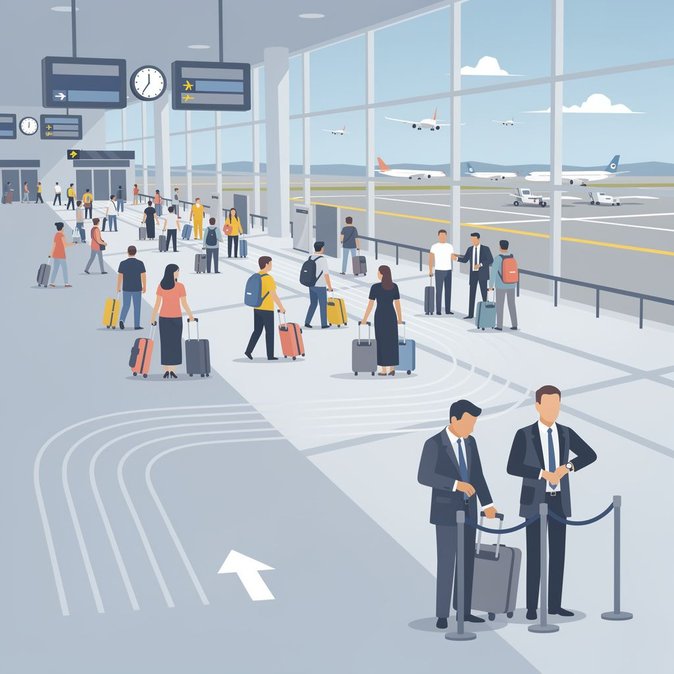
Real-time travel-risk platform A1 reports that, despite a sharp spike in passenger numbers driven by Black Friday promotions, Brazil’s major hubs—São Paulo/Guarulhos (GRU), Rio/Galeão (GIG), Congonhas (CGH) and Brasília (BSB)—experienced "no significant delays, cancellations or labour disruptions" over the past 24 hours. The briefing, issued at 10:00 UTC on 28 November 2026, forecasts continued high volumes through the weekend. LATAM, Gol and Azul extended flash sales until 30 November, pushing load factors above 90 % on key leisure routes to Recife, Salvador and Florianópolis. Airport operators deployed additional staff, fast-track lanes and biometric boarding gates to maintain throughput. Infraero confirmed that average security-queue wait time at GRU peaked at 17 minutes—within service-level targets. For corporate travel planners, the message is two-fold: discount fares offer cost-savings for year-end trips, but travellers should arrive earlier than usual and build slack into connection times. Ground-handling agents caution that any weather-related disruption in the United States—where post-Thanksgiving storms linger—could cascade into Brazil-bound flights, especially on the JFK-GRU corridor serviced by American Airlines and LATAM. The retail-driven surge also affects cargo capacity; LATAM Cargo has re-routed freighters to accommodate e-commerce demand, which may reduce belly-hold space for passenger baggage on popular flights. Mobility teams moving household goods during year-end assignments should secure bookings early. Looking ahead, airport authorities will apply lessons from this stress test when planning for the Christmas-New Year peak. Biometric e-gates rolled out at GIG and BSB reduced passport-control times by 35 %; further expansion could become permanent policy if performance remains strong.
Source: A1 – Alertas de Viagem