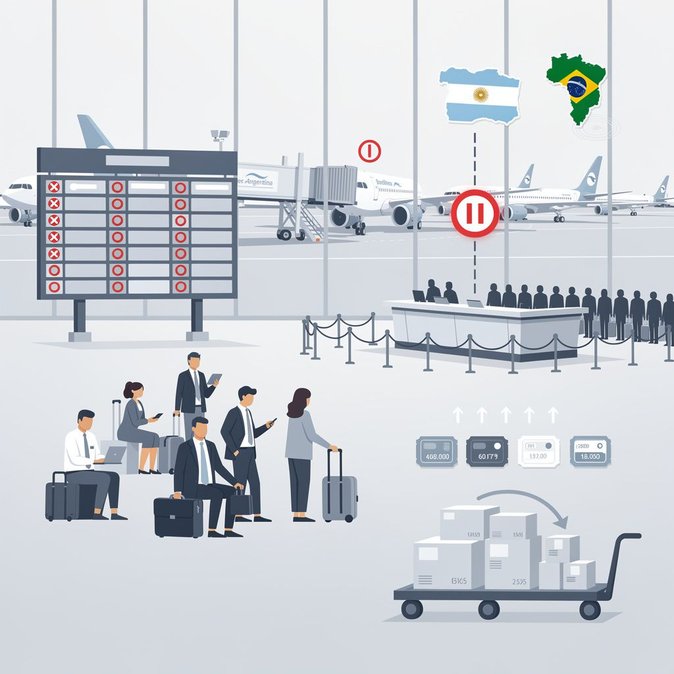
A 24-hour strike called by the Asociación de Pilotos de Líneas Aéreas (APLA) began at midday on 26 November 2026 and has forced Aerolíneas Argentinas to cancel or reschedule roughly 300 flights, including its high-frequency links between Buenos Aires (EZE/AEP) and Brazil’s principal commercial centres São Paulo/Guarulhos (GRU) and Rio de Janeiro/Galeão (GIG). According to the airline, 6 000 passengers have been affected, while estimated direct and indirect losses could top US $1.1 million. The work-stoppage is the latest flash-point in a protracted wage dispute: APLA accuses the state-owned flag-carrier of ignoring contract commitments and allowing salaries to lag inflation. Management, for its part, says it cannot offer additional raises without new government subsidies. Negotiations mediated by Argentina’s Ministry of Labour broke down late Wednesday, triggering the industrial action. For Brazilian corporates, the walk-out comes at the worst possible moment: year-end board meetings and retail sourcing trips traditionally crowd Brazil–Argentina corridors from late November through Christmas. Travel-management companies report that all São Paulo–Buenos Aires seats on LATAM and GOL sold out within hours of the strike notice, driving last-minute economy fares above R$4 000. Cargo is also hit: automotive components regularly flown southbound on night freighters are being rerouted via Porto Alegre and Montevideo. Aerolíneas says it is prioritising re-accommodation of passengers holding through-tickets to Brazil; however, its interline partners have limited spare capacity. Travellers stuck at Ezeiza report minimum delays of 24 hours before onward seats become available. The airline warns that knock-on timetable adjustments could persist into the weekend even if the strike ends on schedule at 12:00 on 27 November. Practical advice for Brazilian businesses includes: (1) checking the status of codeshare flights even if booked on LATAM or GOL flight numbers; (2) confirming hotel “no-show” waivers; and (3) reviewing cargo insurance policies for coverage of strike-related delays. Longer-term, multinationals may wish to diversify critical staff travel via Córdoba or Rosario, which are served from São Paulo by other carriers and were less exposed during this stoppage.
Source: Clarín (newsletter digest)