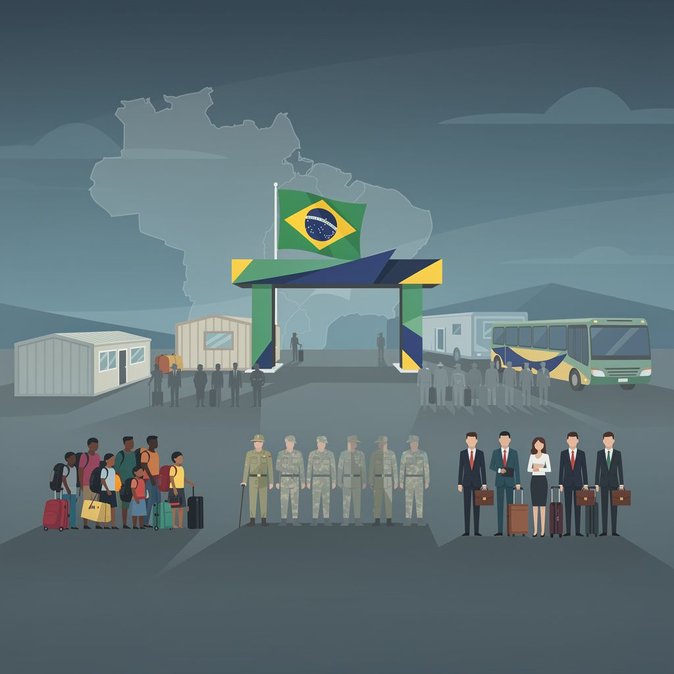
Portaria 7.186, published in the Diário Oficial da União on 27 November 2026, confers provisional naturalisation on 11 children born abroad to foreign parents residing in Brazil. Signed by the Ministry of Justice’s Coordination for Migration Processes, the measure applies Article 12(II)(a) of the Constitution and Article 70 of Migration Law 13.445/2017. Beneficiaries include minors from Lebanon, Venezuela, Nigeria, Pakistan, Egypt, Palestine, Peru, Belarus, Bolivia, and Russia who have settled with their families in São Paulo, Santa Catarina, Paraná, and Espírito Santo. Provisional nationality remains valid until two years after the child reaches the age of majority, at which point they may confirm permanent citizenship. For mobility and relocation teams, the portaria provides certainty around access to public services—especially public health care, education, and formal employment—during formative years. Parents no longer need to maintain separate residency renewals for their children, reducing administrative overhead. The announcement also reflects Brazil’s growing role as a destination for multi-regional migration flows. Over 4,000 provisional naturalisations have been issued since the 2017 law modernised nationality rules, simplifying the path to citizenship for children who meet residence and school-enrolment criteria. Companies employing skilled migrants should review dependants’ status in light of the new portaria. HR teams can pre-empt future compliance checks by ensuring that minors naturalised provisionally are inscribed in the CPF registry and that their parents update corporate records to reflect Brazilian nationality, which can simplify tax and social-security withholding.
Source: Diário Oficial via Atlas Público