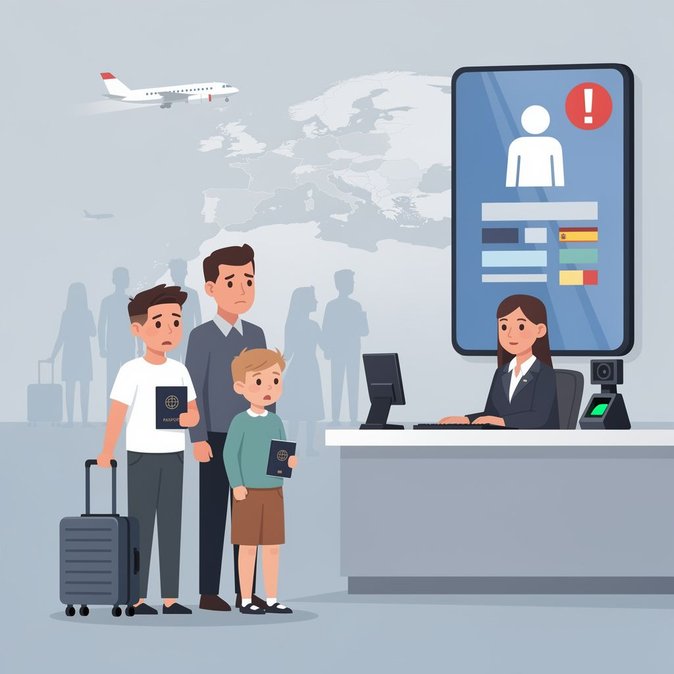
A high-profile case reported by The Independent has highlighted growing concerns about data errors in the European Union’s biometric Entry-Exit System (EES), now fully operational across Spain’s external borders. Caroline Wood discovered that her 16-year-old daughter Eloise was still recorded as ‘in Spain’ months after the family had flown home to the UK following a summer trip to view the solar eclipse in Madrid. Their EES record shows zero remaining Schengen days, meaning Eloise risks being treated as an overstayer – potentially incurring fines or a two-year entry ban – when the family tries to fly to Italy for a prepaid ski holiday in December. Under the post-Brexit 90/180-day rule, UK citizens must have their biometric EES record correctly stamped on entry and exit. Spain’s Policia Nacional has asked for a notarised passport copy before it can amend the teenager’s file and has up to 45 days to respond, well past the family’s travel date. The UK Foreign, Commonwealth & Development Office says it is “raising the issue with the European Commission” but cannot intervene directly. Corporate mobility teams are reporting a rise in similar incidents involving British, U.S. and Australian business travellers whose fingerprints failed to upload or whose facial images were mismatched at automated kiosks in Madrid, Barcelona and Málaga. Errors typically come to light only when travellers re-enter the Schengen area and are flagged as potential overstayers. Practical steps: assignees should retain boarding passes and passport scans to prove previous exits; immigration counsel recommend checking EES status online before booking further trips. Companies may need to build extra lead-time into travel plans until Spanish border authorities streamline the correction process. Failure to resolve EES discrepancies could bar employees from attending client meetings, conferences or even returning to their EU assignments.
Source: The Independent