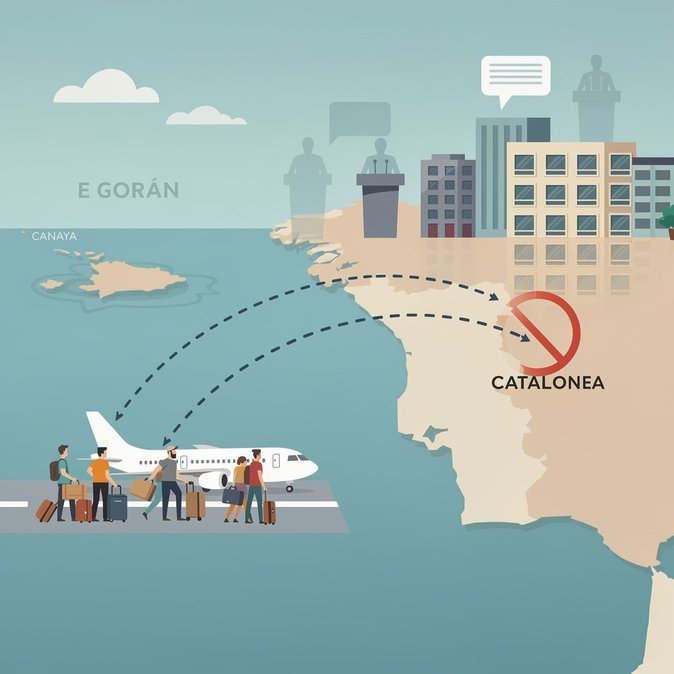
In the final days of Spain’s snap parliamentary campaign, the Ministry of Inclusion, Social Security and Migration cancelled a planned relocation flight carrying around 30 recently arrived migrants from the Canary Islands to the seaside town of Malgrat de Mar (Barcelona). According to sources cited by El País, the decision came after previous transfers to hotels in Blanes and Lloret de Mar were seized upon by opposition politicians as evidence of alleged ‘secret’ migrant resettlement programmes. The Canary Islands route has broken arrival records this month, stretching reception facilities on El Hierro and Gran Canaria. Under Spain’s humanitarian reception scheme, migrants are routinely moved to the mainland and housed temporarily in off-season hotels while asylum claims are processed. However, with anti-immigration rhetoric dominating campaign rallies, central and regional authorities feared fresh transfers could become a flashpoint. Operationally, the last-minute cancellation underscores the logistical fragility of Spain’s inland transfer system. NGOs contracted to run reception centres say constant schedule changes strand migrants in overcrowded island facilities and complicate medical clearances. For corporate mobility teams relocating staff to Catalonia, sudden surges or withdrawals of hotel capacity can affect short-term accommodation availability and pricing. Policy analysts note that whichever coalition emerges from the 29 November vote will inherit a delicate balancing act: relieving pressure on Atlantic island hotspots while avoiding political backlash in destination regions. Companies with assignees in Barcelona or Girona should monitor local sentiment and factor potential protest disruptions into relocation timelines.
Source: El País