OECD Migration Outlook 2025: Foreign-born workforce in Czechia tops 1 million for the first time
China Extends Visa-Free Entry for Belgian Travellers Until 31 December 2026
Ottawa slashes international-student intake by 50 % over three years
Latest News

China Officially Launches Innovative “K-Visa” to Lure Global Tech Talent
China has switched on the long-anticipated K-Visa, a five-year, multiple-entry permit that lets foreign tech talent enter without a job offer and later convert to permanent residence. The move is designed to fill skills gaps in AI, chips and robotics as U.S. immigration hurdles rise. Companies gain faster deployment of specialists, but must still manage work-notification formalities and retention challenges.

FAA Orders Airlines to Cut Up to 10 % of Flights as 40-Day Shutdown Cripples U.S. Skies
With federal pay on hold, air-traffic-controller staffing has plunged, prompting the FAA to order airlines to cut up to 10 % of flights through 14 November. Cancellations and delays have already affected more than one million passengers and are disrupting corporate travel, cargo flows, and holiday plans.
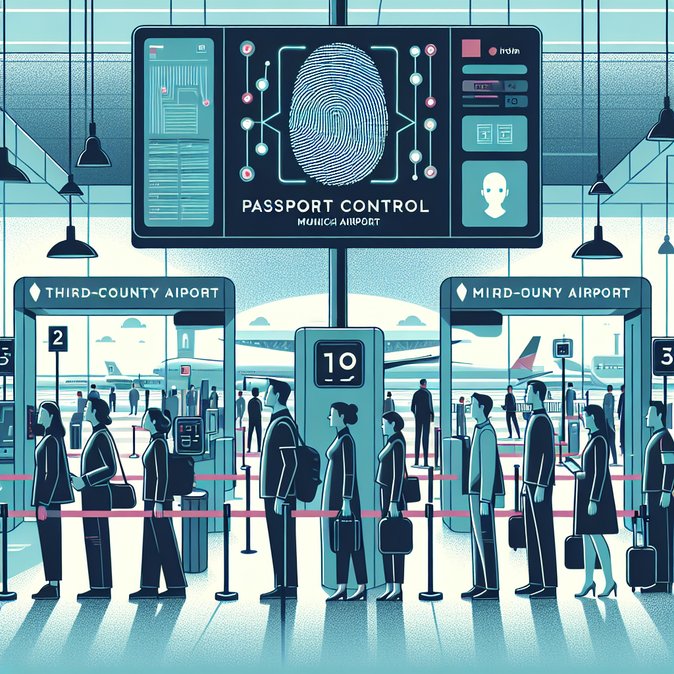
Germany rolls out EU Entry/Exit System at Munich Airport
Munich Airport switched on the EU’s new biometric Entry/Exit System (EES) on 11 November 2025. Third-country travellers now have fingerprints, facial images and travel dates captured automatically, replacing passport stamps. The pilot will expand to all major German airports by March 2026 and is a precursor to ETIAS. Companies must brief staff on stricter 90/180-day calculations and data-privacy implications.

Ryanair’s €400 Million Expansion at Shannon Adds Four New European Routes
Ryanair will base a fourth aircraft at Shannon Airport from April 2026, investing US $400 million and adding new routes to Rome, Madrid, Warsaw and Poznań. The move increases Shannon’s capacity by 15 percent and brings its network to 30 destinations, improving connectivity for businesses along Ireland’s west coast.

COP30 Opens in Belém as Brazil Welcomes 50,000 Delegates With Fast-Track E-Visas
COP30 opened today in Belém, triggering Brazil’s largest mobility operation since Rio 2016. Free electronic visas, extra flights and temporary immigration staff are smoothing arrival formalities for 50,000 delegates, but high demand is straining hotel and transport capacity. Companies should plan around tight seat availability and remember that the COP30 e-Visa does not replace normal work-permit rules.

China extends 30-day visa-free entry for Austrian passport holders to 31 Dec 2026
Beijing has prolonged its 30-day visa-free regime for Austrian citizens until 31 December 2026, eliminating consular paperwork for short business and tourist trips. The move makes last-minute travel to China easier for Austrian executives and could boost bilateral tourism and trade. Companies should still track the 30-day limit and ensure employees travelling for work obtain the correct permits.

Swiss-EU Draft Deal Would Grant Unconditional Permanent Residence to EU Nationals After Five Years
A leaked draft of Switzerland’s new institutional agreement with the EU would grant EU nationals a C-permit (permanent residence) automatically after five years, removing today’s language and integration hurdles. Around 700,000 people could benefit immediately. The change would give employers more certainty over long-term assignments but is likely to face political opposition and a referendum before it can take effect.

High Court allows Epping hotel to keep housing asylum seekers, averting immediate relocations
The High Court rejected Epping Forest District Council’s attempt to shut the Bell Hotel, allowing the Home Office to keep housing asylum seekers there. The ruling averts a disruptive relocation of hundreds of people and signals continued reliance on hotels while longer-term sites are readied. Businesses gain short-term stability but should prepare for ongoing community tension and further legal challenges.

EU designates Spain as ‘high-pressure’ state under new Migration Pact solidarity tool
The European Commission on 11 November named Spain one of four EU countries eligible for the Migration Pact’s ‘solidarity mechanism’. From July 2026 Spain will be entitled to ask other member states for relocations, money or operational support to manage high numbers of arrivals. The move could enhance resources for reception and speed up future residence processing—matters closely watched by HR and mobility managers.

Canberra launches Ministerial Direction 115, creating new three-tier student-visa processing ‘lanes’
Ministerial Direction 115 takes effect on 14 November, introducing fast, standard and slow ‘lanes’ for offshore Subclass 500 applications based on how closely education providers stick to government-set enrolment quotas. Providers above 115 % of their allocation will drop to the slow lane, while those under 80 % get priority processing. The change rewards compliance, penalises over-recruitment and gives corporate mobility planners clearer lead-times for international hires who need student visas before taking graduate roles.

Immigration Department arrests 21 in eight-day crackdown on illegal work by foreign helpers
Hong Kong arrested 14 suspected illegal foreign domestic helpers and seven employers during an eight-day operation ending 11 November. The crackdown highlights tighter enforcement of visa conditions and significantly higher employer penalties, signaling that businesses and expatriate households must double-check compliance.

UK Tightens India Travel Advisory After Red Fort Car Bombing
The UK has updated its India travel advisory after the 10 November Red Fort car bombing, urging British nationals in Delhi to remain vigilant and follow local security instructions. The move could affect insurance coverage, corporate travel policies and winter tourist flows. Businesses with staff in the capital are reassessing itineraries and emergency-response plans.

Dutch Border Controls Extended to June 2026: New Hurdles for Polish Drivers and Cross-Border Workers
The Netherlands will keep its internal border checks until 8 June 2026, adding document inspections and possible delays for the thousands of Polish drivers and business travellers who cross the Dutch frontier each week. Companies must factor in extra transit time and ensure drivers carry full documentation to avoid fines or refused entry.