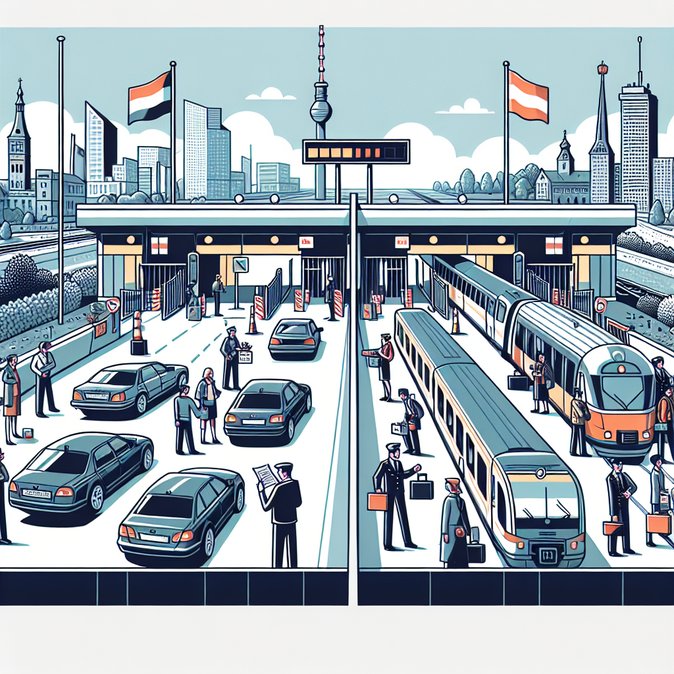
Germany has prolonged the temporary checks it reinstated on 16 September 2025 at almost all land borders—including those with Austria—until at least 15 March 2026, the maximum period permitted by the European Commission.
Bundespolizei officers will continue spot inspections of motorists and train passengers, asking for ID, proof of accommodation or funds and refusing entry where security concerns arise. Berlin cites a 35 % drop in irregular entries since the measure’s revival as justification.
![Germany Extends Land-Border Checks; Austrian Travellers Face Spot Controls Until March 2026]()
For Austrian companies the extension means another three months of potential delays for employees commuting to Bavarian client sites or transferring goods in cross-border supply chains. Logistics associations warn that a five-minute hold-up per truck adds roughly €4 million in monthly costs.
Practical guidance: travellers should carry passports or EU ID cards even on routine business trips, allow extra buffer time and keep invitation letters handy. Firms with high-frequency travel may apply for Federal Police ‘Frequent Traveller’ cards to use designated fast-track lanes.
Bundespolizei officers will continue spot inspections of motorists and train passengers, asking for ID, proof of accommodation or funds and refusing entry where security concerns arise. Berlin cites a 35 % drop in irregular entries since the measure’s revival as justification.

For Austrian companies the extension means another three months of potential delays for employees commuting to Bavarian client sites or transferring goods in cross-border supply chains. Logistics associations warn that a five-minute hold-up per truck adds roughly €4 million in monthly costs.
Practical guidance: travellers should carry passports or EU ID cards even on routine business trips, allow extra buffer time and keep invitation letters handy. Firms with high-frequency travel may apply for Federal Police ‘Frequent Traveller’ cards to use designated fast-track lanes.
Source: VisaHQ Global Mobility News