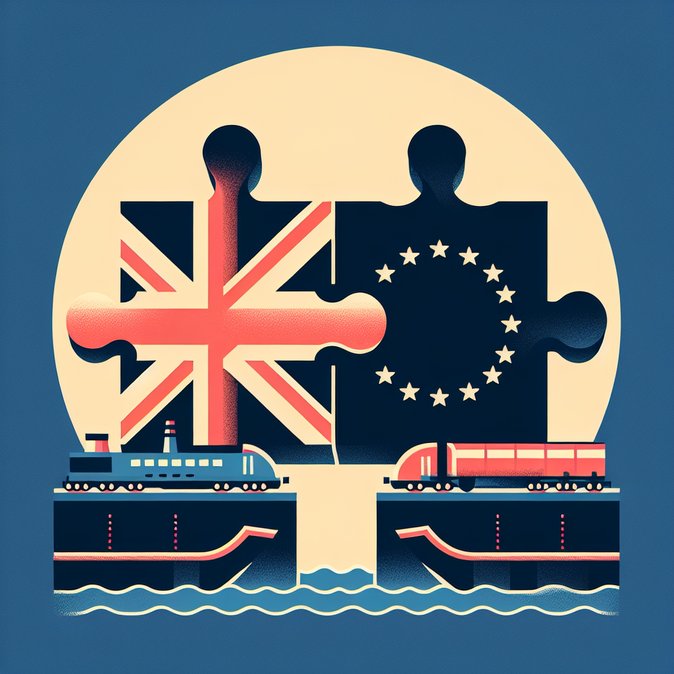
Draft texts leaked on 11 January 2026 show the European Union wants any future UK government that withdraws from a post-Brexit sanitary-and-phytosanitary (SPS) pact to pay for the reinstatement of border infrastructure—a provision EU diplomats dub the “Farage clause”. According to The Guardian and Financial Times summaries picked up by wire services, the clause specifically references the billions France and Ireland spent expanding customs zones at Calais, Dunkirk and Cherbourg after 2020.
For mobility stakeholders the financial safeguard is more than political theatre. If the SPS deal collapses, France would need to redeploy veterinary inspectors, restore hard-border checks on live animal shipments, and re-staff the juxtaposed controls at Dover and the Eurotunnel, leading to severe congestion. The draft therefore aims to deter UK backtracking by making the cost of renewed controls explicit.
![‘Farage Clause’ in Brexit Reset Talks Highlights Cost of Restoring EU-France Border Checks]()
Global companies shipping time-sensitive goods or shuttling staff via Calais should watch the negotiations closely. A stable SPS agreement would simplify duty-of-care planning: fewer lorry queues mean predictable travel times for cross-Channel commuters and assignees living in northern France. Conversely, failure could resurrect the 2021-2022 scenario when Eurostar cancelled trains and pharmaceutical companies paid premiums for temperature-controlled trucking.
While French officials privately welcome the clause, Paris must still secure domestic political backing; farmers’ unions fear cheap UK imports if controls loosen too far. Observers expect a final text by March 2026, leaving little time to adjust before the summer peak.
For mobility stakeholders the financial safeguard is more than political theatre. If the SPS deal collapses, France would need to redeploy veterinary inspectors, restore hard-border checks on live animal shipments, and re-staff the juxtaposed controls at Dover and the Eurotunnel, leading to severe congestion. The draft therefore aims to deter UK backtracking by making the cost of renewed controls explicit.

Global companies shipping time-sensitive goods or shuttling staff via Calais should watch the negotiations closely. A stable SPS agreement would simplify duty-of-care planning: fewer lorry queues mean predictable travel times for cross-Channel commuters and assignees living in northern France. Conversely, failure could resurrect the 2021-2022 scenario when Eurostar cancelled trains and pharmaceutical companies paid premiums for temperature-controlled trucking.
While French officials privately welcome the clause, Paris must still secure domestic political backing; farmers’ unions fear cheap UK imports if controls loosen too far. Observers expect a final text by March 2026, leaving little time to adjust before the summer peak.
Source: The Guardian (wire summary)