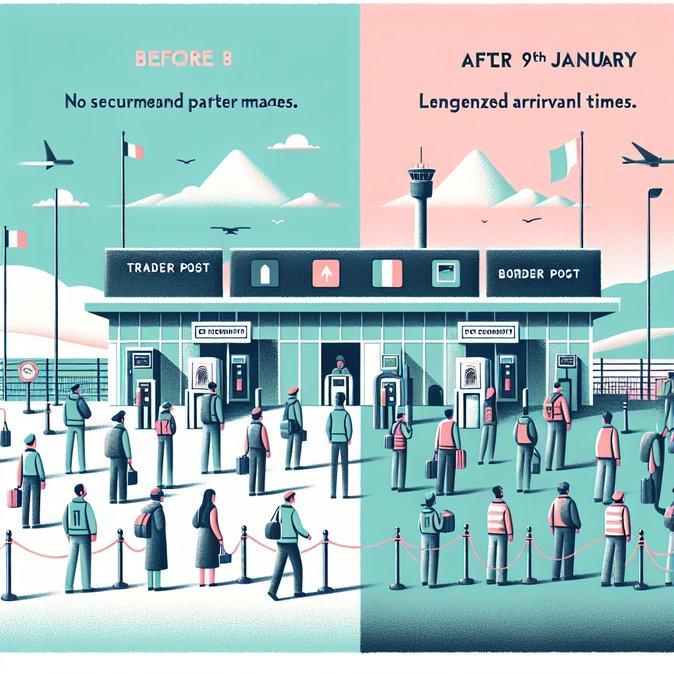
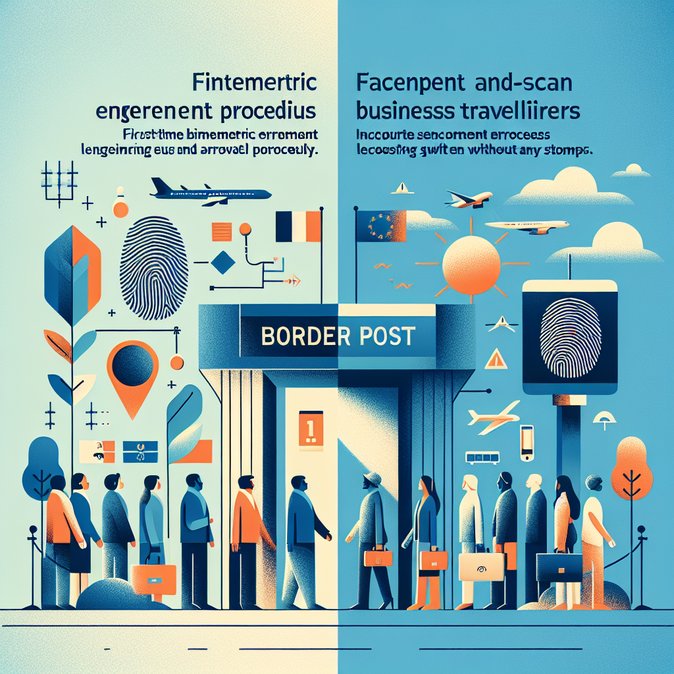
France reached a key implementation milestone for the European Union’s Entry/Exit System (EES) on 9 January, exactly 90 days after phased deployment began. By law, at least half of all external border-crossing points—airports, seaports, rail terminals and road posts—must now take fingerprints and facial images from arriving and departing non-EU travellers. According to the Interior Ministry, the requirement is operational at major hubs including Paris-Charles-de-Gaulle, Orly, Nice, Lyon and the Eurostar terminal at Gare du Nord.
First-time enrolment adds three-to-15 minutes to arrival formalities, but subsequent crossings are automated and passport stamping is eliminated. The government says the system will cut queues in the long run and make it easier to identify visa-overstayers, but privacy advocates have raised concerns about data retention and potential mission creep.
![EU Entry/Exit System hits Day-90 deadline: biometric capture now mandatory at 50 % of French external borders]()
For employers moving staff in and out of France, the practical impact is immediate: itineraries need extra buffer time until employees complete their initial registration. Mobility teams are updating pre-departure checklists, reminding travellers that refusal to provide biometrics leads to denial of entry, and revising service-level agreements with ground-transport providers.
Looking ahead, France must extend biometric capture to 100 % of external border points by 10 April 2026, after which the EU’s ETIAS travel-authorisation scheme will come online. Eurotunnel operators are still negotiating how to collect fingerprints from motorists without causing tailbacks, raising the prospect of a limited grace period for car traffic.
The Day-90 mark confirms that Europe’s most ambitious border-digitalisation project is on track—even as airports grapple with staff training, kiosk glitches and signage challenges. Companies that prepare early stand to minimise disruption once full roll-out begins.
First-time enrolment adds three-to-15 minutes to arrival formalities, but subsequent crossings are automated and passport stamping is eliminated. The government says the system will cut queues in the long run and make it easier to identify visa-overstayers, but privacy advocates have raised concerns about data retention and potential mission creep.

For employers moving staff in and out of France, the practical impact is immediate: itineraries need extra buffer time until employees complete their initial registration. Mobility teams are updating pre-departure checklists, reminding travellers that refusal to provide biometrics leads to denial of entry, and revising service-level agreements with ground-transport providers.
Looking ahead, France must extend biometric capture to 100 % of external border points by 10 April 2026, after which the EU’s ETIAS travel-authorisation scheme will come online. Eurotunnel operators are still negotiating how to collect fingerprints from motorists without causing tailbacks, raising the prospect of a limited grace period for car traffic.
The Day-90 mark confirms that Europe’s most ambitious border-digitalisation project is on track—even as airports grapple with staff training, kiosk glitches and signage challenges. Companies that prepare early stand to minimise disruption once full roll-out begins.
Source: VisaHQ Global Mobility News
How VisaHQ can help
VisaHQ simplifies the visa application process for individuals and businesses. Check current travel requirements, prepare the required documents and manage your application online through the VisaHQ France portal.More From France
View all
Storm Goretti paralyzes Paris-Normandy rail corridor and ports, forcing companies to activate contingency plans
EU Entry/Exit System hits Day-90 milestone: biometric checks now live at half of France’s external border posts