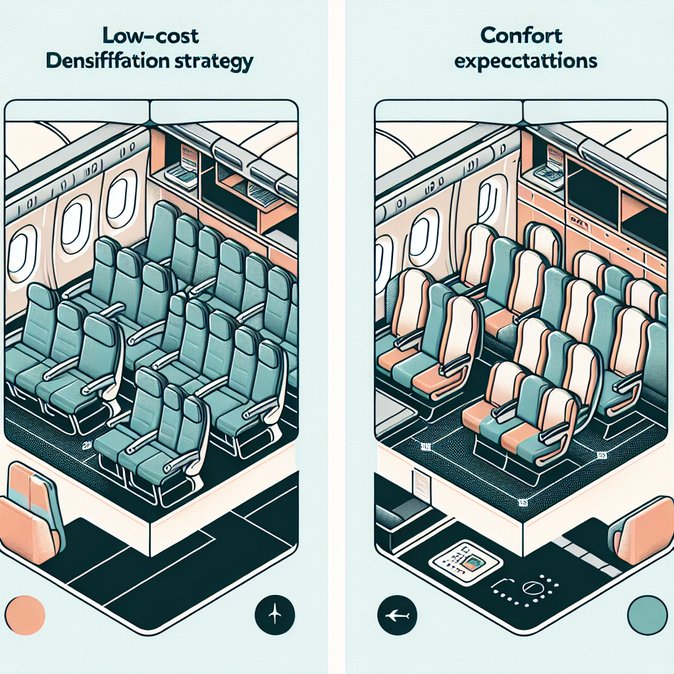
Facing a barrage of complaints from travellers and even flight crews, WestJet will reach a decision this week—weeks ahead of schedule—on whether to keep or scrap its trial of non-reclinable economy seats that cut pitch to 28 inches. (reuters.com)
The ultra-dense configuration, rolled out on select Boeing 737s, was designed to test price tolerance in Canada’s low-cost segment. However, social-media backlash and internal safety concerns prompted an accelerated review ordered by Chief Experience Officer Samantha Taylor.
![WestJet Fast-Tracks Review of Fixed-Back Economy Seats After Passenger Outcry]()
Transport Canada has confirmed the layout meets regulatory requirements, but occupational-health experts warn that restricted legroom on flights exceeding four hours could heighten the risk of deep-vein thrombosis—an issue of particular concern to frequent business travellers.
Corporate travel buyers, already wrestling with tighter budgets, say they will shift volume to Air Canada or Porter if comfort erodes further. Some multinationals have negotiated clauses in their airline contracts requiring advance notice of material cabin changes. The episode also places pressure on WestJet’s owner, Onex Corp., to balance revenue maximisation with brand perception in a market where travellers have limited carrier options.
Should WestJet abandon the seats, the airline may face costs to retrofit cabins—but preserving corporate loyalty and ancillary revenue from extra-legroom rows could offset the hit.
The ultra-dense configuration, rolled out on select Boeing 737s, was designed to test price tolerance in Canada’s low-cost segment. However, social-media backlash and internal safety concerns prompted an accelerated review ordered by Chief Experience Officer Samantha Taylor.
Transport Canada has confirmed the layout meets regulatory requirements, but occupational-health experts warn that restricted legroom on flights exceeding four hours could heighten the risk of deep-vein thrombosis—an issue of particular concern to frequent business travellers.
Corporate travel buyers, already wrestling with tighter budgets, say they will shift volume to Air Canada or Porter if comfort erodes further. Some multinationals have negotiated clauses in their airline contracts requiring advance notice of material cabin changes. The episode also places pressure on WestJet’s owner, Onex Corp., to balance revenue maximisation with brand perception in a market where travellers have limited carrier options.
Should WestJet abandon the seats, the airline may face costs to retrofit cabins—but preserving corporate loyalty and ancillary revenue from extra-legroom rows could offset the hit.
Source: Reuters