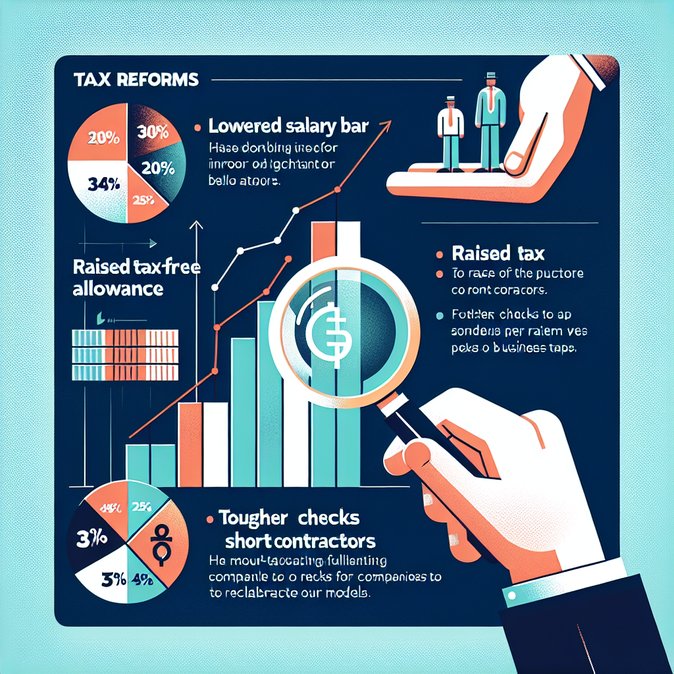
Advisory firm Vandelanotte released a comprehensive briefing on 13 January that unpacks the wave of Belgian and EU-level changes affecting cross-border employment in 2026. For multinationals the headline news is a more generous special-expat tax regime: the minimum salary threshold drops to €70,000 and the tax-free allowance rises to 35 % with no ceiling, making Belgium a more attractive base for high-skilled staff compared with neighbouring France or Germany.
At the same time, compliance screws are tightening. Chain-liability rules are now stricter in traditionally high-risk sectors such as construction and meat processing, obliging prime contractors to verify subcontractor work-status documentation up-front or face joint-and-several penalties. The duty-of-care concept is also extended economy-wide, reflecting political pressure to curb undeclared labour.
![Belgium overhauls international-employment playbook for 2026: expat tax break sweetened, liability rules tightened]()
In a welcome clarification for road-warrior staff, Belgium’s social-security office (NSSO) now accepts that employers can grant full per-diems for same-day foreign business trips of under ten hours—bringing practice in line with neighbouring countries and simplifying payroll.
EU jurisprudence feeds into the 2026 landscape as well: recent Court of Justice rulings tighten the 25 % rule for determining applicable social-security law, and the forthcoming European Social Security Pass promises digital, real-time exchange of A1 certificates. Employers must audit time-tracking data now to avoid breaches once the ESSP goes live.
Practical takeaway: mobility managers should re-run cost-projections for Belgian assignments factoring in the improved expat regime, update subcontractor vetting checklists, and brief travelling staff on per-diem eligibility. Early engagement with payroll providers is advisable to capture the new salary-threshold logic before the first 2026 filings.
At the same time, compliance screws are tightening. Chain-liability rules are now stricter in traditionally high-risk sectors such as construction and meat processing, obliging prime contractors to verify subcontractor work-status documentation up-front or face joint-and-several penalties. The duty-of-care concept is also extended economy-wide, reflecting political pressure to curb undeclared labour.

In a welcome clarification for road-warrior staff, Belgium’s social-security office (NSSO) now accepts that employers can grant full per-diems for same-day foreign business trips of under ten hours—bringing practice in line with neighbouring countries and simplifying payroll.
EU jurisprudence feeds into the 2026 landscape as well: recent Court of Justice rulings tighten the 25 % rule for determining applicable social-security law, and the forthcoming European Social Security Pass promises digital, real-time exchange of A1 certificates. Employers must audit time-tracking data now to avoid breaches once the ESSP goes live.
Practical takeaway: mobility managers should re-run cost-projections for Belgian assignments factoring in the improved expat regime, update subcontractor vetting checklists, and brief travelling staff on per-diem eligibility. Early engagement with payroll providers is advisable to capture the new salary-threshold logic before the first 2026 filings.
Source: Vandelanotte