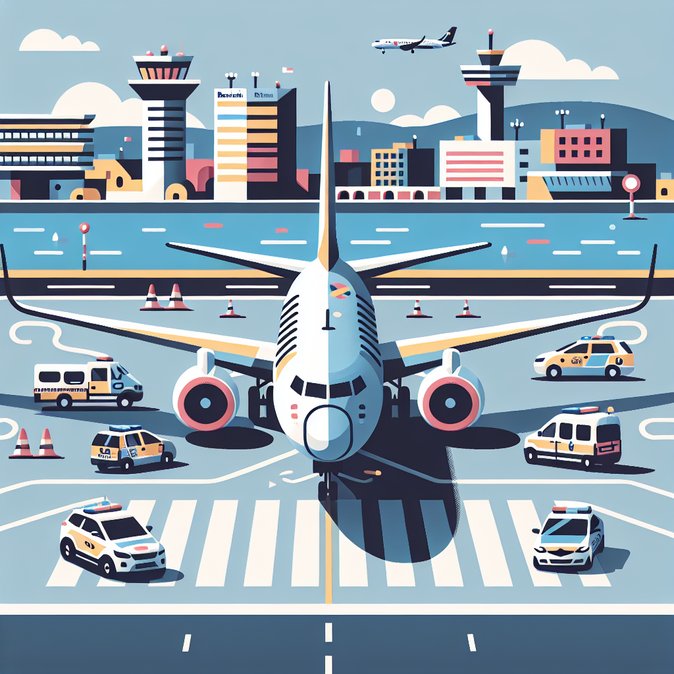
Spanish aviation security was tested on 16 January when Turkish Airlines flight TK1853 from Istanbul to Barcelona made an emergency landing after crew discovered a Wi-Fi hotspot whose name threatened that a bomb was on board. The Airbus A321 circled twice off Catalonia’s coast before touching down safely at Josep Tarradellas-El Prat Airport about 30 minutes behind schedule. All passengers disembarked while the Civil Guard searched the aircraft; no explosives were found.(businessinsider.com)
The scare highlights the growing operational risk posed by passengers’ connected devices. Under EU regulation (EC) 300/2008 airlines must report any credible threat; Spain’s Civil Aviation Accident and Incident Investigation Commission (CIAIAC) will now decide whether to open a formal probe. Turkish Airlines said it is cooperating with Spanish authorities to identify the individual who set the hotspot name.
![Hot-spot prank triggers bomb scare and emergency landing of Istanbul–Barcelona flight]()
Although no flights were cancelled, the incident caused knock-on delays for several midday departures from El Prat as security teams redeployed. Travel-management companies should expect temporary increases in random cabin-baggage checks on flights arriving from Turkey and North Africa. Employers moving staff through Barcelona this quarter are advised to add buffer time to itineraries and remind travellers that any “joke” references to bombs—including in device names—can constitute a criminal offence under Spain’s Penal Code.
Barcelona’s airport handled a record 57.5 million passengers in 2025, and AENA’s contingency plans rely on tight turn-around windows; disruptive security events therefore have an outsized impact on punctuality metrics. The episode also underscores the need for updated corporate travel policies covering in-flight connectivity etiquette and digital-device compliance.
The scare highlights the growing operational risk posed by passengers’ connected devices. Under EU regulation (EC) 300/2008 airlines must report any credible threat; Spain’s Civil Aviation Accident and Incident Investigation Commission (CIAIAC) will now decide whether to open a formal probe. Turkish Airlines said it is cooperating with Spanish authorities to identify the individual who set the hotspot name.

Although no flights were cancelled, the incident caused knock-on delays for several midday departures from El Prat as security teams redeployed. Travel-management companies should expect temporary increases in random cabin-baggage checks on flights arriving from Turkey and North Africa. Employers moving staff through Barcelona this quarter are advised to add buffer time to itineraries and remind travellers that any “joke” references to bombs—including in device names—can constitute a criminal offence under Spain’s Penal Code.
Barcelona’s airport handled a record 57.5 million passengers in 2025, and AENA’s contingency plans rely on tight turn-around windows; disruptive security events therefore have an outsized impact on punctuality metrics. The episode also underscores the need for updated corporate travel policies covering in-flight connectivity etiquette and digital-device compliance.
Source: Business Insider