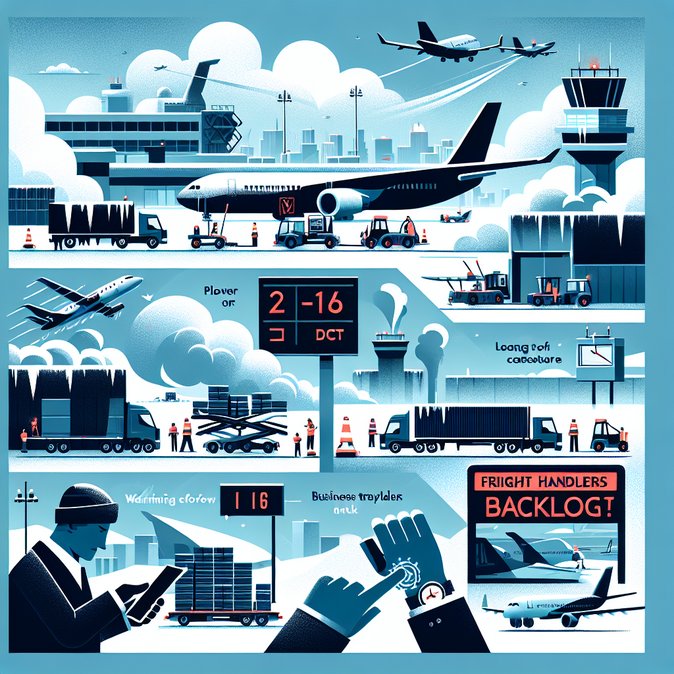
A biting cold front that settled over central Poland on 18-19 January forced Warsaw Chopin Airport (WAW) into extended de-icing cycles and slowed every stage of ground handling. Real-time airport data on the evening of 18 January showed 68 percent of departures leaving late, with an average delay of 33 minutes; 17 percent of arrivals were also delayed, averaging 48 minutes.
Airport operator PPL said teams were operating “maximum de-icing capacity” but sub-zero temperatures (-8 °C at 18:38 CET) meant every outbound aircraft required repeat anti-ice treatment. LOT Polish Airlines lengthened its official minimum-connection-time for transfer passengers and advised travellers to allow at least a two-hour buffer when connecting in Warsaw. Cargo handlers prioritised temperature-sensitive pharma and food shipments, but some outbound trucking slots were pushed back several hours, creating knock-on congestion at the airport’s freight park.
![Deep freeze triggers cascading flight delays at Warsaw Chopin Airport]()
Business-travel managers are telling staff to keep boarding passes, delay notifications and receipts in case EU 261 compensation becomes payable. With Mazovia’s cold-weather alert now extended until 20 January, multinational firms are also reviewing duty-of-care protocols for employees transiting Poland, including hotel allocations when irregular operations strand crews and travellers overnight.
Practical tips for travellers include: 1) download airline apps for real-time re-booking options; 2) carry proof of onward employment or meeting schedules when seeking priority assistance; and 3) if rerouted through non-Schengen hubs, double-check that Schengen visa validity covers re-entry into Poland. Online visa platforms such as VisaHQ’s Poland portal can instantly verify requirements for short-notice itinerary changes.
Airport operator PPL said teams were operating “maximum de-icing capacity” but sub-zero temperatures (-8 °C at 18:38 CET) meant every outbound aircraft required repeat anti-ice treatment. LOT Polish Airlines lengthened its official minimum-connection-time for transfer passengers and advised travellers to allow at least a two-hour buffer when connecting in Warsaw. Cargo handlers prioritised temperature-sensitive pharma and food shipments, but some outbound trucking slots were pushed back several hours, creating knock-on congestion at the airport’s freight park.

Business-travel managers are telling staff to keep boarding passes, delay notifications and receipts in case EU 261 compensation becomes payable. With Mazovia’s cold-weather alert now extended until 20 January, multinational firms are also reviewing duty-of-care protocols for employees transiting Poland, including hotel allocations when irregular operations strand crews and travellers overnight.
Practical tips for travellers include: 1) download airline apps for real-time re-booking options; 2) carry proof of onward employment or meeting schedules when seeking priority assistance; and 3) if rerouted through non-Schengen hubs, double-check that Schengen visa validity covers re-entry into Poland. Online visa platforms such as VisaHQ’s Poland portal can instantly verify requirements for short-notice itinerary changes.
Source: VisaHQ Global Mobility News