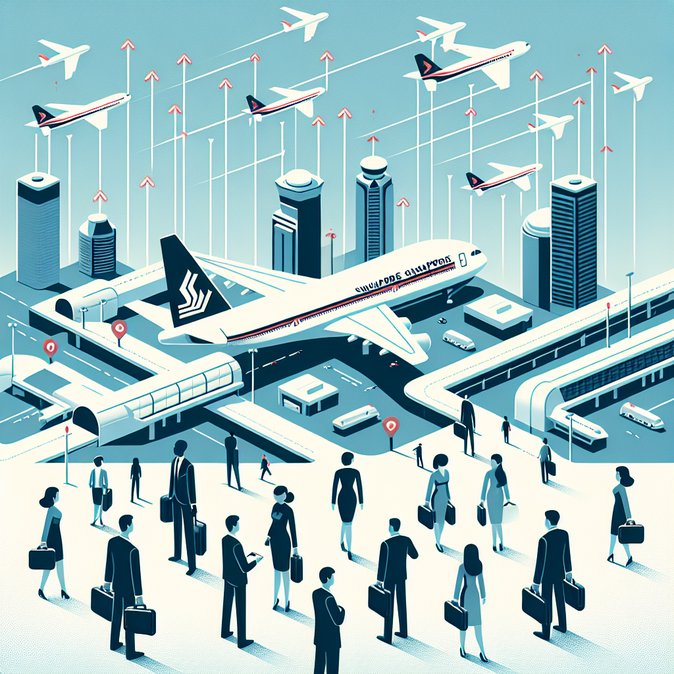
Singapore’s Changi Airport will operate more than 600 supplementary flights to 15 mainland Chinese destinations between 1 February and 8 March 2026, the airport operator confirmed on 19 January. The temporary schedule—more than double last year’s Lunar New Year uplift—will be mounted by six Chinese carriers, many using wide-body aircraft to maximise seat capacity.
The decision underscores how quickly two-way traffic has rebounded since China and Singapore introduced a 30-day mutual visa-free regime in early 2024. China reclaimed its spot as Changi’s largest inbound market in Q4 2025, and seat bookings for the upcoming holiday are already 28 % higher than 2025 levels. Popular points on the list include Shanghai, Guangzhou and Chongqing, but secondary cities such as Ningbo, Wenzhou and Changsha will also receive charter-style frequencies, expanding connectivity for Chinese SMEs looking to source from Southeast Asia.
![Changi Airport Adds 600 Extra Flights to 15 Chinese Cities for Lunar New Year Surge]()
For businesses the additional lift provides welcome relief to sky-high fares that had persisted through 2025’s capacity crunch. Corporate travel buyers report that round-trip prices on Shanghai–Singapore routes dropped 14 % in forward markets immediately after the announcement. Mobility teams should nevertheless secure seats early; Travel Mole data indicate that 70 % of the supplementary inventory was snapped up within 48 hours of release, primarily by Chinese tour wholesalers.
The airport will complement the flights with Mandarin-language customer-service booths, UnionPay-enabled kiosks and festive events in Terminal 3. Changi’s capacity move also signals confidence that Singapore’s bilateral visa-free agreement will remain politically stable, giving relocation planners greater certainty when scheduling hand-overs or orientation visits for China-based assignees.
The decision underscores how quickly two-way traffic has rebounded since China and Singapore introduced a 30-day mutual visa-free regime in early 2024. China reclaimed its spot as Changi’s largest inbound market in Q4 2025, and seat bookings for the upcoming holiday are already 28 % higher than 2025 levels. Popular points on the list include Shanghai, Guangzhou and Chongqing, but secondary cities such as Ningbo, Wenzhou and Changsha will also receive charter-style frequencies, expanding connectivity for Chinese SMEs looking to source from Southeast Asia.

For businesses the additional lift provides welcome relief to sky-high fares that had persisted through 2025’s capacity crunch. Corporate travel buyers report that round-trip prices on Shanghai–Singapore routes dropped 14 % in forward markets immediately after the announcement. Mobility teams should nevertheless secure seats early; Travel Mole data indicate that 70 % of the supplementary inventory was snapped up within 48 hours of release, primarily by Chinese tour wholesalers.
The airport will complement the flights with Mandarin-language customer-service booths, UnionPay-enabled kiosks and festive events in Terminal 3. Changi’s capacity move also signals confidence that Singapore’s bilateral visa-free agreement will remain politically stable, giving relocation planners greater certainty when scheduling hand-overs or orientation visits for China-based assignees.
Source: Xinhua via People’s Daily Online