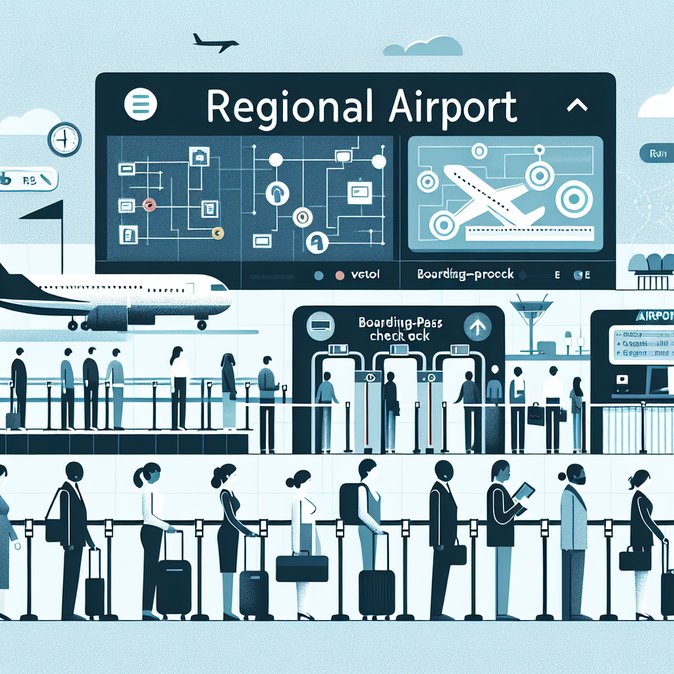
The Regional Airport of Maringá, a fast-growing secondary hub in southern Brazil, has installed three electronic self-boarding gates (e-gates) that will go live on 16 February. The R$ 529 000-a-year contract with local supplier Digicon covers equipment, maintenance and staff training and is expected to cut pre-security queuing times by up to 60 %.
Two standard e-gates and one accessibility-adapted gate will automatically scan bar-coded boarding passes and verify passenger data against the departures control system before releasing travellers to the security checkpoint. The technology is similar to that used at São Paulo and Rio airports but is a first for the state of Paraná.
![Aeroporto de Maringá becomes Paraná’s first airport with e-gates]()
Airport superintendent Gustavo Vieira said the project is part of a broader modernisation plan that anticipates traffic tripling to 1.6 million passengers by 2035. Automated flow data will feed the airport’s new analytics dashboard, allowing management to optimise staff rosters and retail-concession hours based on real-time demand—information valuable to airlines planning future operations to the agribusiness-rich region.
For global-mobility programmes, the advance means faster domestic transfers for assignees connecting via Maringá to factory towns in the interior. It also signals that Brazil’s mid-sized airports are accelerating technology adoption, something expatriate service providers should monitor when advising on relocation corridors.
Civil-aviation analysts point out that the modest capital outlay and 20 % saving versus the bid ceiling demonstrate a replicable cost model for other municipalities, potentially unlocking a national wave of e-gate deployments that could ease bottlenecks ahead of the 2027 COP30 summit.
Two standard e-gates and one accessibility-adapted gate will automatically scan bar-coded boarding passes and verify passenger data against the departures control system before releasing travellers to the security checkpoint. The technology is similar to that used at São Paulo and Rio airports but is a first for the state of Paraná.

Airport superintendent Gustavo Vieira said the project is part of a broader modernisation plan that anticipates traffic tripling to 1.6 million passengers by 2035. Automated flow data will feed the airport’s new analytics dashboard, allowing management to optimise staff rosters and retail-concession hours based on real-time demand—information valuable to airlines planning future operations to the agribusiness-rich region.
For global-mobility programmes, the advance means faster domestic transfers for assignees connecting via Maringá to factory towns in the interior. It also signals that Brazil’s mid-sized airports are accelerating technology adoption, something expatriate service providers should monitor when advising on relocation corridors.
Civil-aviation analysts point out that the modest capital outlay and 20 % saving versus the bid ceiling demonstrate a replicable cost model for other municipalities, potentially unlocking a national wave of e-gate deployments that could ease bottlenecks ahead of the 2027 COP30 summit.
Source: AZ Magazine Maringá