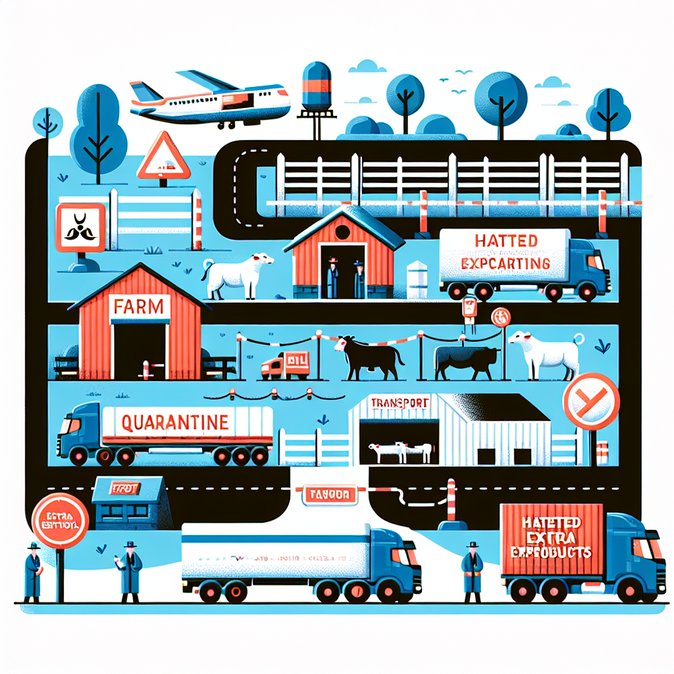
Cyprus’ Veterinary Services confirmed on 20 February 2026 that the island had entered ‘protection zone’ mode after laboratory tests detected foot-and-mouth disease (FMD) in a cattle herd in Livadia, Larnaca district. An emergency meeting of agriculture, interior, health and civil-defence officials drew up an immediate action plan that quarantines 23 farms within a three-kilometre radius of the index holding and orders the culling of 260 head of cattle. Roadblocks were erected on secondary lanes leading into the zone and mobile patrols began inspecting vehicles for clandestine animal movements. Under EU Animal Health Law, Cyprus must now suspend all exports of live cloven-hoofed animals, fresh meat and unpasteurised dairy to other member states until the European Commission’s Standing Committee on Plants, Animals, Food and Feed lifts the safeguard measures. Within hours of the Cypriot announcement, the United Kingdom’s Food Standards Agency instructed border posts to hold—rather than clear—shipments of susceptible commodities originating from Cyprus. A formal Official Veterinary Surgeon (OVS) note (2026/06) was issued later the same day, asking importers to prepare for possible re-export or destruction of consignments once risk assessments are complete. For companies that rely on Cyprus’ small but specialised dairy-export sector—halloumi is a €260 million business—the sudden restrictions create immediate supply-chain headaches. Freight forwarders report consignments stuck at Dover and Rotterdam awaiting instructions, and insurers are assessing potential spoilage claims. Multinational supermarkets with private-label halloumi lines have already started contingency sourcing from Greece and Denmark to avoid shelf-gaps in March. Mobility managers moving staff or project cargo into Cyprus should note that the protection zone also restricts the entry of service vehicles and veterinary specialists who are not pre-cleared by the Livestock Department. While human travellers face no health risks—FMD does not infect people—arrivals may experience enhanced luggage and vehicle inspections at Larnaca port and airport if they have visited farms abroad. Cyprus last faced FMD in 1980. Containment then took four months. Authorities say today’s traceability systems are far stronger, but they are urging farmers nationwide to tighten bio-security and to report unexplained lesions or lameness immediately. Businesses with perishable exports should monitor the Commission’s Animal Disease Notification System for the green light to resume trading.
How VisaHQ can help
VisaHQ simplifies the visa application process for individuals and businesses. Check current travel requirements, prepare the required documents and manage your application online through the VisaHQ Cyprus portal.More From Cyprus
View all
Cyprus EU Council presidency outlines cohesion-policy priorities, flags Schengen readiness in Brussels brief

EU maritime regions gather in Nicosia, put migration management and mobility resilience on 2026 agenda