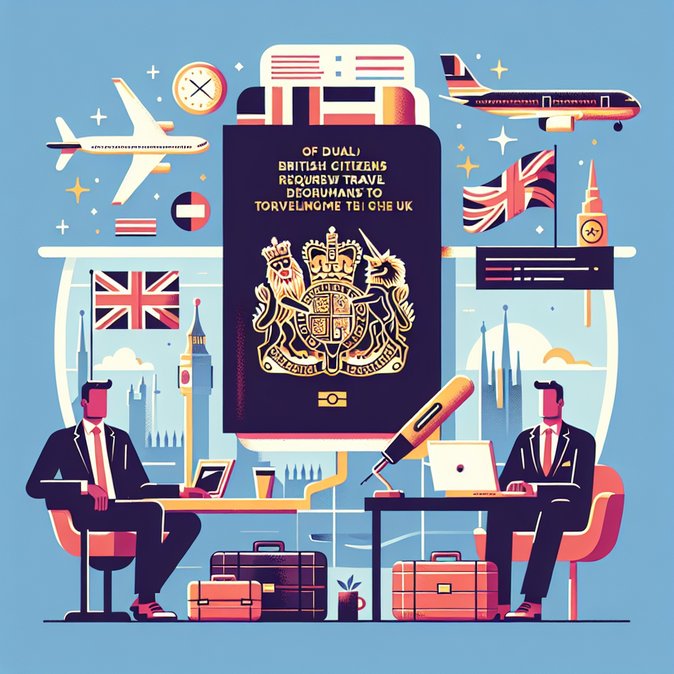
The UK Home Office confirmed on 24 February 2026 that, as of 25 February, dual British nationals must present a valid UK or Irish passport – or a costly certificate of entitlement – when boarding transport to the United Kingdom. The change is part of the phased roll-out of the Electronic Travel Authorisation (ETA) system covering non-visa nationals. The rule particularly affects the estimated 32,000 Belgium-based professionals who hold both Belgian and British nationality. Previously many used their Belgian passports plus a UK National Insurance number or residence evidence to travel for business meetings. Under the new regime, carriers will deny boarding unless the traveller’s “permission to travel” can be verified electronically against the UK Border system. The workaround offered by London – accepting expired UK passports issued in or after 1989 – is limited and at the discretion of airlines or ferry companies. Eurostar told Belgian corporates that staff without compliant documents risk being off-loaded at Brussels-Midi, incurring penalty fares and missed meetings. Travel-policy teams in Belgian multinationals are therefore rushing to identify affected employees and budget for expedited UK passport renewals (€190 for a 7-day premium service) or, where applicable, to rely on Irish passports – still valid for entry without ETA. Employers are also updating invitation letters to reference ETA numbers for non-British third-country participants in UK workshops. Immigration advisers caution that similar “own-passport” requirements are likely once the EU Entry/Exit System and ETIAS go live in April and November 2026 respectively. Cross-checking staff passport inventories against upcoming digital-border schemes on both sides of the Channel is becoming a compliance-critical task.
Source: The Brussels Times