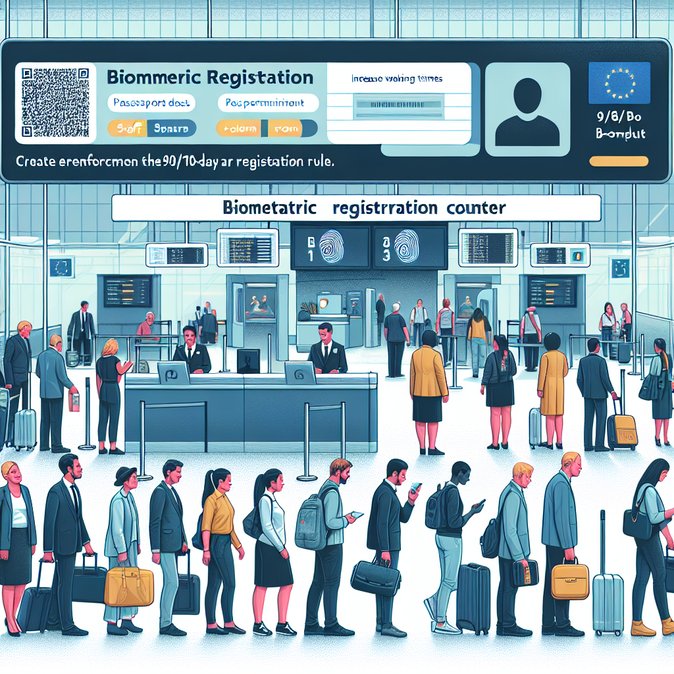
Only hours after the EES went live, the European Commission released eye-catching statistics from the six-month pilot phase: 7,043 travellers were refused entry at Schengen borders, and almost 700 were flagged as potential security risks. The data—announced in Brussels—illustrate how much more granular border screening has become in the biometric era. According to the report, most refusals stemmed from previous overstays disguised by passport-stamp wear-and-tear or by using multiple passports. With automated calculation now doing the work, front-line officers can no longer overlook errors. A senior official in Belgium’s Immigration Office warned that “soft” overstays of even a single day will trigger alerts and possible fines. Security services are equally interested in the 697 alerts generated by EES’s watch-list matching. Although many were resolved as false positives, 38 cases resulted in immediate refusal and transfer to law-enforcement custody. Belgian police confirmed that two of those arrests occurred at Brussels Airport in March. Business-travel stakeholders fear reputational fallout for firms whose assignees appear on the refusal statistics. Legal advisers recommend proactive audits of past travel and early intervention—filing retroactive visa applications or residence-permit upgrades—to avoid denial at the gate. The Commission promises monthly transparency reports once the system is fully stable, meaning companies with international staff will have a regular barometer of compliance risk.
Source: The Peninsula