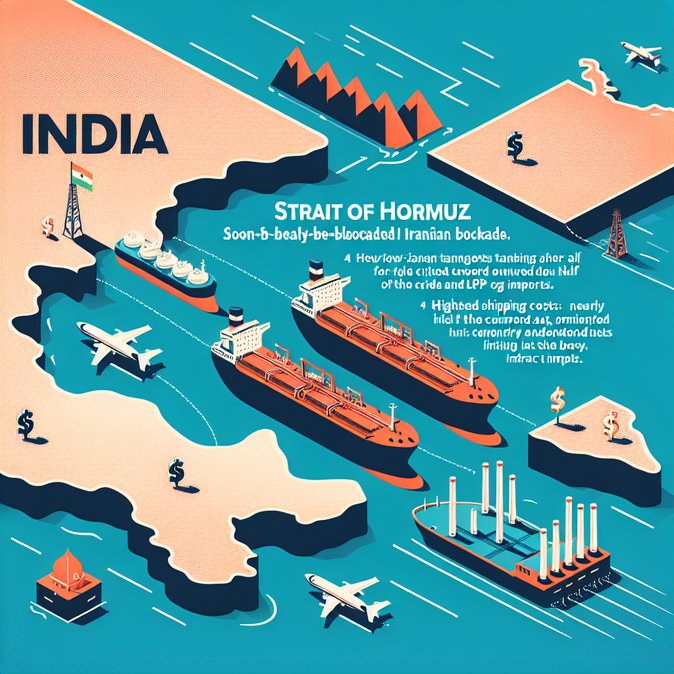
The United States formally triggered a maritime blockade of all Iranian ports at 14:00 GMT on 13 April after cease-fire talks in Islamabad collapsed, according to a Pentagon statement carried in The Times of India’s Middle-East live blog. President Donald Trump claimed the move was necessary to force Tehran to reopen the Strait of Hormuz, which Iran has heavily restricted since the 28 February outbreak of hostilities. Indian refineries source roughly 45 percent of their crude and LPG through the strait. Shipping ministry officials confirmed that 15 India-flagged LPG carriers remain inside the Gulf, although Tehran’s ambassador to New Delhi insisted no tolls had been levied on Indian tankers. Insurance underwriters in Mumbai immediately hiked war-risk premia by 60 percent and demanded real-time AIS tracking for any vessel entering the exclusion zone. Beyond energy, the blockade threatens critical supply lines for Indian project cargo destined for Oman and Qatar and could snarl crew rotations as shipping companies cancel Gulf port calls. Mobility heads at EPC giants Larsen & Toubro and Reliance Industries told Global Mobility News they are mapping contingency routings via the Cape of Good Hope and exploring temporary accommodation for assignees whose deployments may be extended involuntarily. The International Maritime Organization reminded members that international law protects innocent passage through straits, but acknowledged enforcement is murky. Analysts expect charter rates for Very Large Crude Carriers on the India-China run to spike in the coming days, and airlines flying over Iran have already filed for longer routings, adding fuel surcharges that will filter into corporate travel budgets.