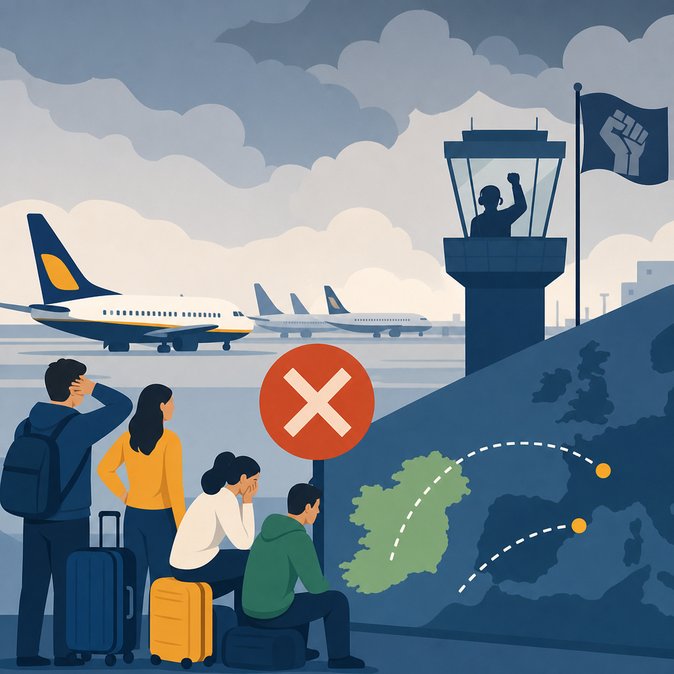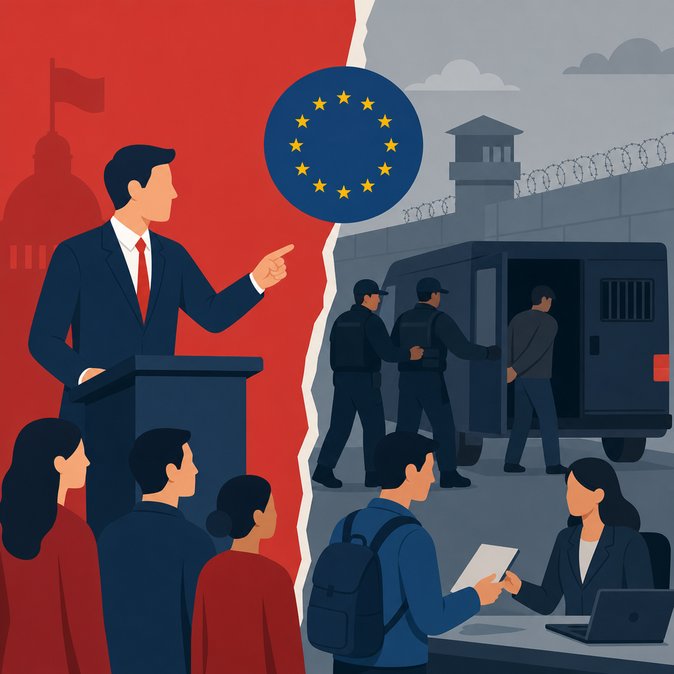
Ireland’s domestic migration debate spilled onto the European stage on 3 June after Labour MEP Aodhán Ó Ríordáin condemned Fine Gael members of the European People’s Party for backing the EU’s controversial Returns Regulation. The text, part of the soon-to-be-ratified Migration & Asylum Pact, establishes common rules for speeding up the removal of people who have no legal right to remain in the Union. Critics liken its enforcement powers—including warrant-less searches, offshore processing centres and potential detention of children for up to two years—to the practices of the former U.S. Immigration and Customs Enforcement (ICE) agency. Although immigration enforcement remains a national competence, the Regulation will be directly applicable in Ireland once adopted. Legal experts note that it could oblige the State to expand detention capacity and to participate in EU-wide “return hubs,” placing fresh operational and human-rights pressures on the Irish Prison Service and the Garda National Immigration Bureau. Businesses that rely on non-EU talent worry that the political optics of the pact could harden attitudes toward labour-market migration, just as skills shortages in construction, healthcare and ICT are peaking. Government figures have welcomed the pact as a “firm but fair” tool to restore public confidence in asylum management. Yet civil-society groups—including the Irish Refugee Council and Amnesty International Ireland—argue that the deal erodes procedural safeguards without tackling root causes such as processing delays and inadequate reception capacity. They point out that Ireland’s International Protection Office already faces a backlog of more than 7,000 cases, meaning faster return orders could simply strand more people in limbo. For mobility managers, the immediate practical impact is limited: work-permit and intra-company-transfer streams remain unaffected. Longer term, however, employers may see stricter document checks at ports of entry and a chillier public discourse around migration. Businesses sending staff to or through other EU states should also prepare for a more security-driven border environment, with expanded biometric screening and carrier-liability fines if undocumented passengers slip through. Ó Ríordáin’s intervention suggests that migration policy will feature prominently in Ireland’s campaign for the 2026 European elections—and could shape the agenda of Dublin’s EU Presidency in the second half of next year. With political polarisation rising, companies dependent on international talent will need to monitor developments closely and reinforce diversity messaging both internally and in public affairs outreach.
Source: Labour.ie