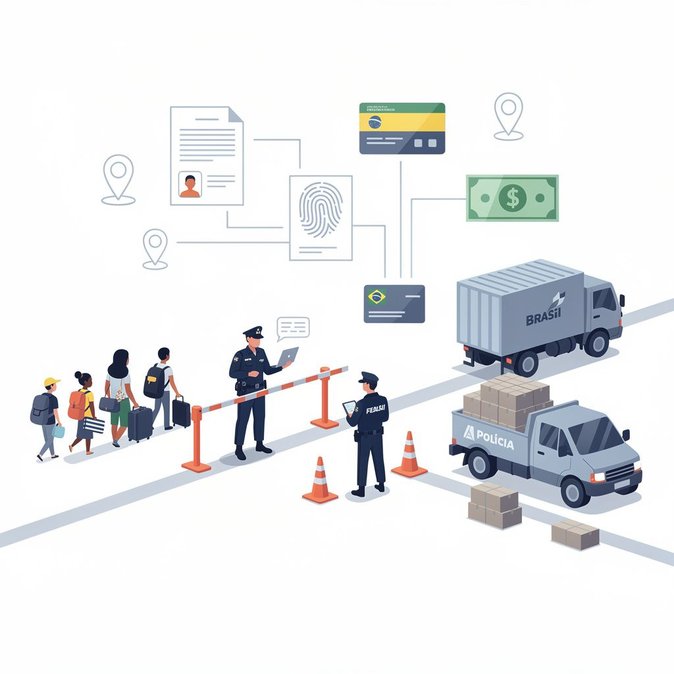
The Brazilian Federal Police (PF) opened the 16-hour raid dubbed Operação Conexão Norte at dawn on Thursday, 11 June 2026. Agents executed three search-and-seizure warrants in Boa Vista and one in Bonfim, two strategic towns in the northern state of Roraima that sit astride the main land corridor linking Guyana to Brazil. According to the PF’s intelligence unit, the criminal network specialised in bringing Cuban nationals across the dense Amazonian border while charging as much as R$12,000 per person for forged travel documents and clandestine road transport. Investigators say the ring relied on a chain of “coyotes” operating on both sides of the frontier. Once inside Brazil, migrants were dispersed to larger cities where they tried to legalise their status or continue their journey towards São Paulo and Rio de Janeiro. The PF stresses that many victims were exposed to hunger, extortion and the risk of trafficking. Although no arrests were made during Thursday’s phase, agents collected laptops, mobile phones and accounting ledgers that map the group’s financial flows. A second phase, focusing on the money-laundering arm, is expected within weeks. If convicted, the organisers face up to fifteen years in prison for promoting illegal migration, aggravated by transnational operations and the endangerment of vulnerable persons. For companies deploying staff to northern Brazil—particularly in the mining, energy and logistics sectors—the operation signals tighter scrutiny at the Guyanese and Venezuelan corridors used by expatriates and supply chains. Employers are advised to ensure that subcontracted transport firms and local fixers comply with immigration rules, as corporate liability may be invoked when irregular facilitation is detected. Beyond enforcement, Conexão Norte will feed data to the Ministry of Justice’s new Integrated Migration Risk System, launched in April 2026, which cross-checks police intelligence with visa and border-crossing databases. Businesses should expect more real-time validation of work-permit dossiers and a probable rise in on-arrival interviews for travellers transiting through northern checkpoints.
Source: Polícia Federal